
What Is Japandi Design? The Complete Guide to Calm, Considered Interiors (2026)
Do you romanticise about a home that’s light, airy and instantly calming? Where there is gentle sunlight streaming in, bouncing off clean-lined design and a neutral palette — no “loud” colours, but gentle ones that calm and soothe and simplify. If that’s your vibe, then you’re going to swoon over Japandi design. .

There is a specific feeling that the best Japandi interiors create — and it is difficult to describe until you have experienced it. The room feels quieter than it should. The light seems softer. You sit down and something in you settles. Not because the space is bare, but because every object in it has earned its place.
That feeling is the point of Japandi design. Not a look to recreate from a mood board, but a philosophy — one that becomes easier to apply the more deeply you understand where it comes from.
This guide covers everything: what Japandi design actually is, the four principles that define it, how to apply it room by room, and the specific decisions that make the biggest difference — especially in a smaller space. Japandi is one of the few design philosophies that genuinely thrives under constraint.
This article contains affiliate links. If you purchase through them I may earn a small commission at no extra cost to you.
In this guide
What is Japandi design?
Japandi is the design philosophy that emerges when Japanese minimalism and Scandinavian functionality are applied together. The name is a portmanteau — Japan + Scandi — but the result is more than a stylistic hybrid. It is a genuinely coherent way of thinking about space.
Both traditions share a foundational belief: that a well-designed environment makes daily life feel better. Japanese aesthetics bring the concept of ma — the beauty of negative space — and wabi-sabi, the acceptance of imperfection as a form of beauty. Scandinavian design brings hygge, the cultivation of warmth and comfort, and a deeply practical approach to furniture and materials.
Together they produce interiors that are calm without being cold, minimal without being empty, and considered without being precious. The furniture earns its place. The materials are honest. The light is warm. And the room feels like it was designed for the person living in it — not for a photograph.
“The biggest focus is to stay with subtleness. Less is more — but every less must be intentional.”
— Julee Wray, founder of Truss Interiors
The four principles that define Japandi design
These are not rules to follow rigidly — they are principles to internalise. Once you understand them, every design decision becomes significantly easier to make.
01
Clean minimalism
Favour clean lines and simplicity in furniture. Straight or gently curved pieces at considered heights, with limited detailing. The wabi-sabi principle applies — pieces can be imperfect but they must be balanced. The result is a space that flows without clutter and feels settled rather than arranged.
02
Neutral colour palette
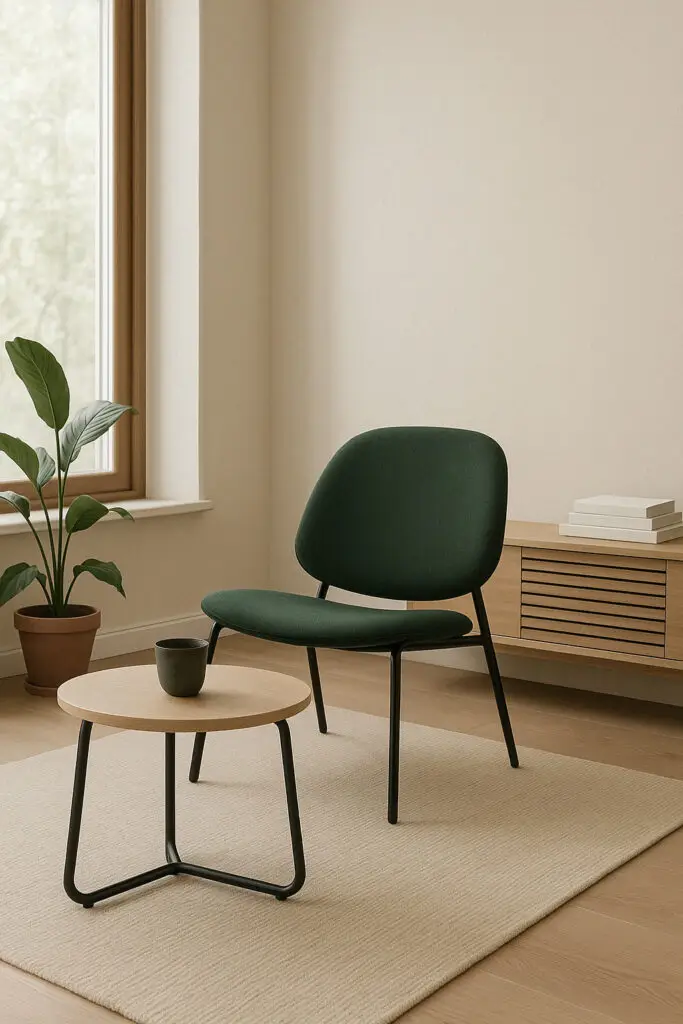
Colours drawn from nature — greys, beiges, warm whites, tan, and stone. Occasionally a subtle accent of forest green, dusty blue, or terracotta, always in proportion. A practical guide: 50% beige, 30% white, 10% grey, 10% accent colour. The palette should feel like the room is exhaling.
03
Natural light
Natural light is treated as a design material, not a given. Large windows, sliding glass doors, and sheer linen curtains paired with blackout backing are standard tools. In the evening, layered warm artificial light takes over — never a single overhead source. Light should follow the rhythm of the day.
04
Sustainable natural materials
Wood, rattan, jute, linen, ceramic, stone, bamboo — materials that come from the earth and age honestly. The grain variation in solid oak, the slight irregularity in hand-thrown ceramic, the softness of stonewashed linen — these are features, not flaws.
For a deeper exploration of how these principles translate into specific product decisions across every room, see our complete Japandi furniture guide for 2026.
How to style a Japandi living room
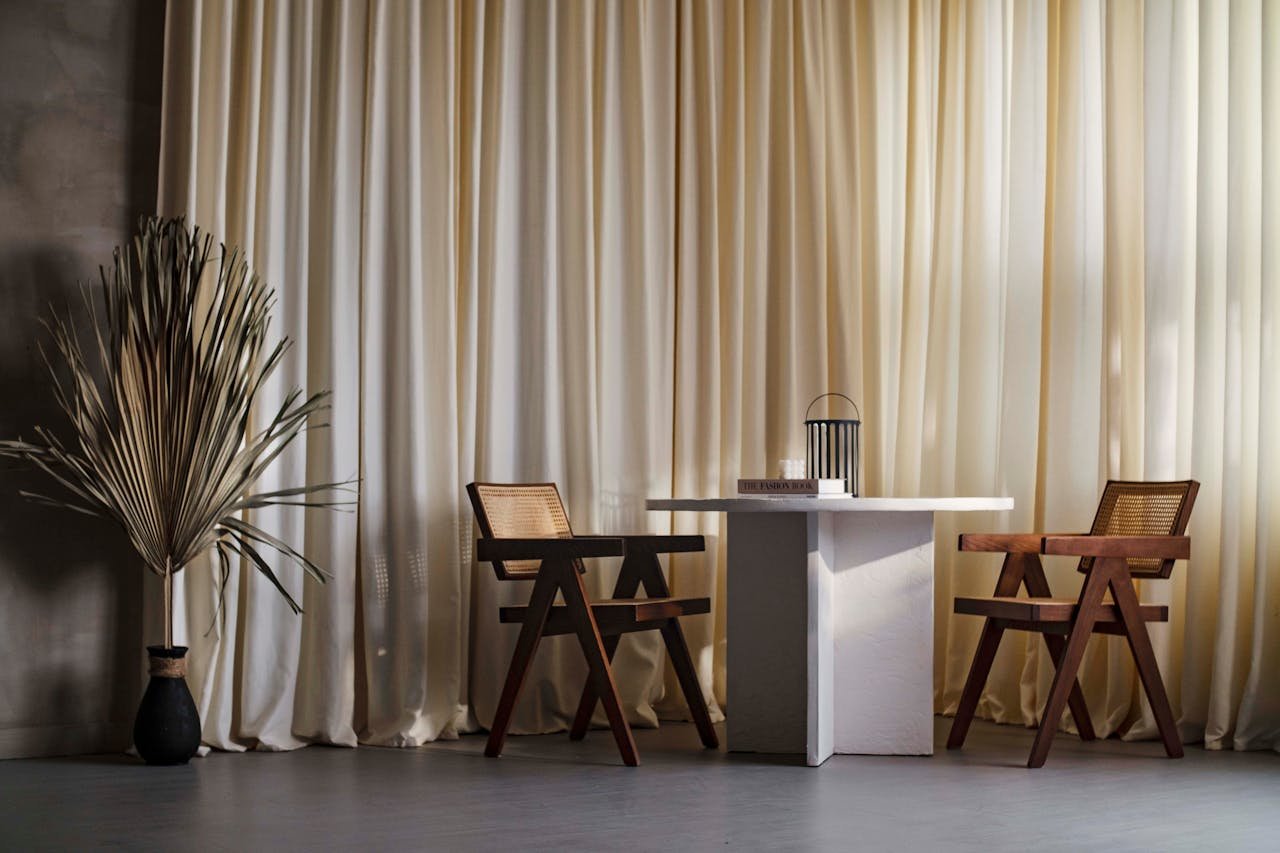
The living room is where Japandi design is most immediately felt — and most commonly misapplied. The temptation is to strip the room bare. The result is a space that feels cold rather than calm. A Japandi living room is minimal, not empty. Every object that remains has been chosen deliberately.
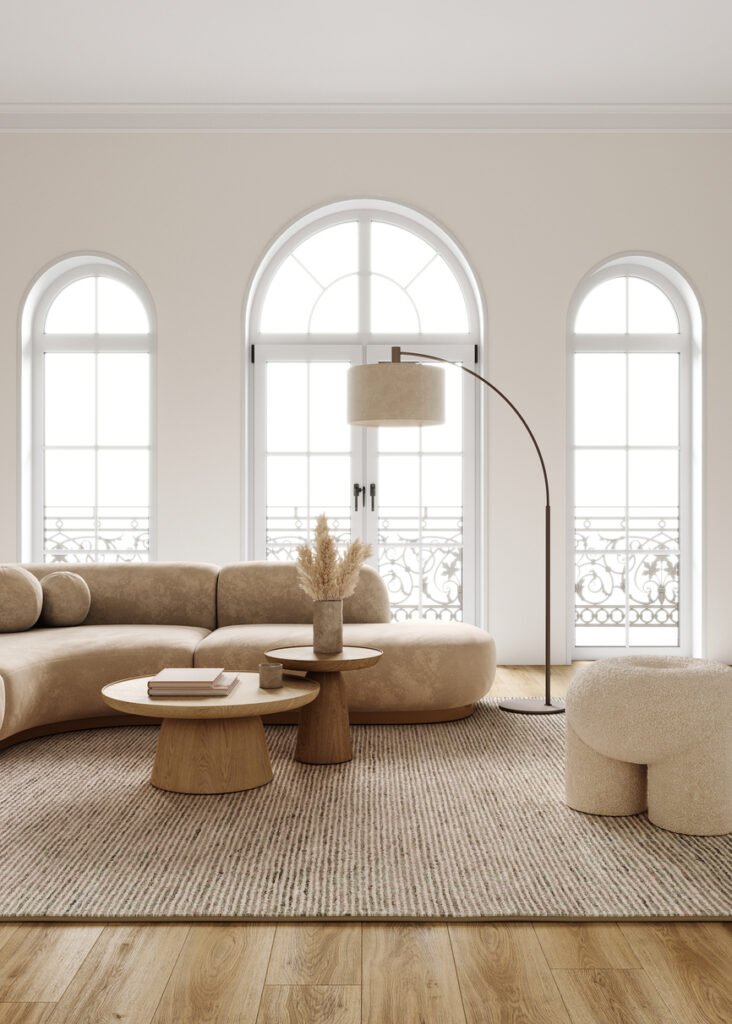
Start with the floor level. A low-profile sofa shifts the visual weight of the entire room downward and creates that grounded, settled quality that defines Japanese domestic spaces. Pair it with a natural jute or wool rug in undyed or stone tones to anchor the seating area.
The coffee table is the centrepiece of the Japandi living room — the single most impactful piece to get right. Solid oak or walnut, low profile, clean edges. Our guide to the best Japandi coffee tables on Etsy covers ten verified picks at different price points — including one clear top recommendation.
Lighting is the most underestimated element in any Japandi living room. A single overhead light will undo the atmosphere of every other decision you have made. The goal is layered, warm, directional light — a floor lamp beside the sofa, a table lamp in a corner. All at 2700K, all dimmable where possible. For specific recommendations, our Japandi floor lamps guide covers five verified Etsy picks.
Japandi living room checklist
Low-profile sofa in natural linen, boucle, or wool — no bright colours
Solid wood coffee table, low and clean-lined — oak, walnut, or teak
Natural fibre rug — jute, wool, or New Zealand wool in undyed tones
Layered warm lighting — floor lamp and table lamp, no single overhead source
One organic centrepiece — dried stems, a ceramic vase, or a single sculptural object
Negative space — leave at least one surface completely clear
How to design a Japandi dining room
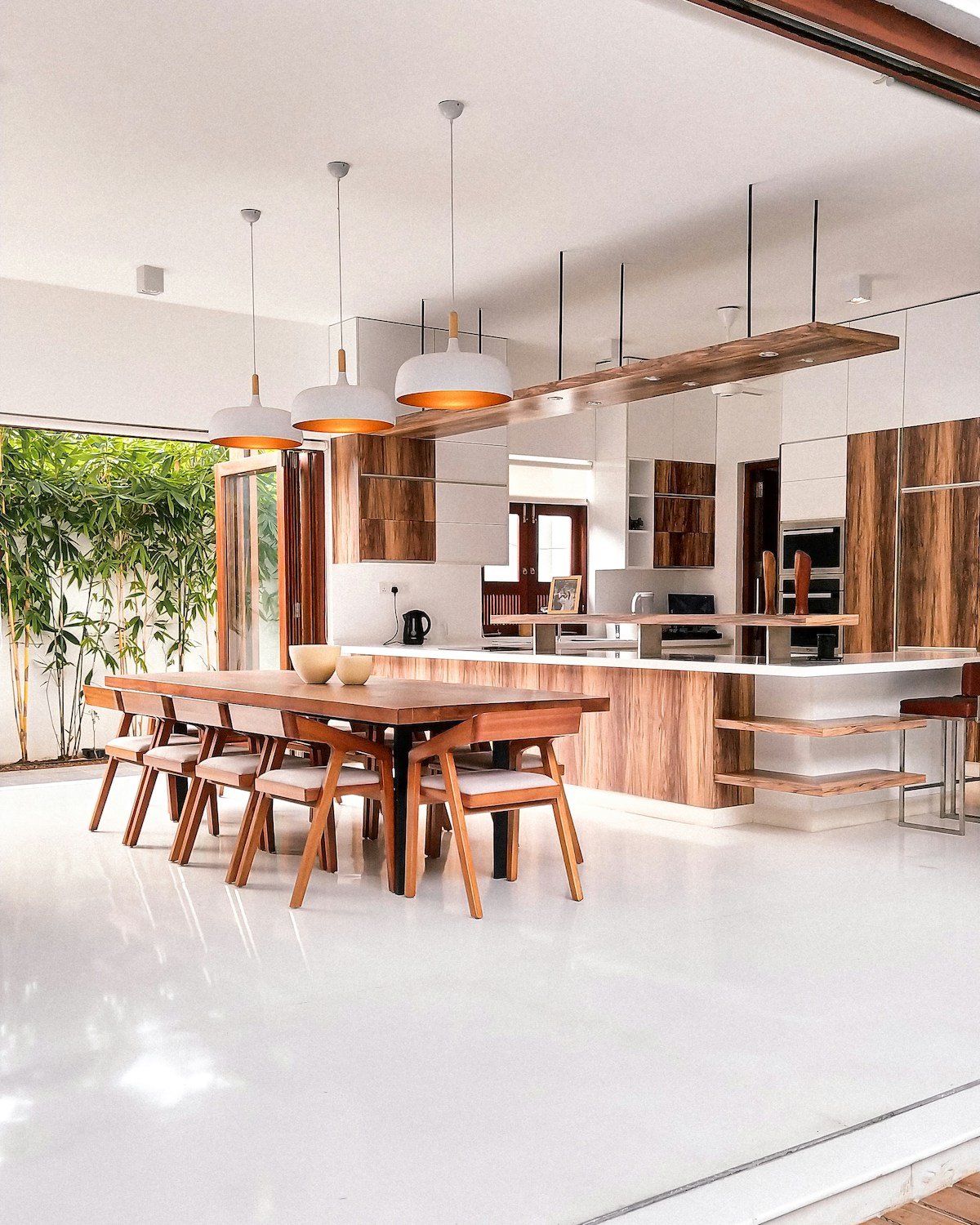
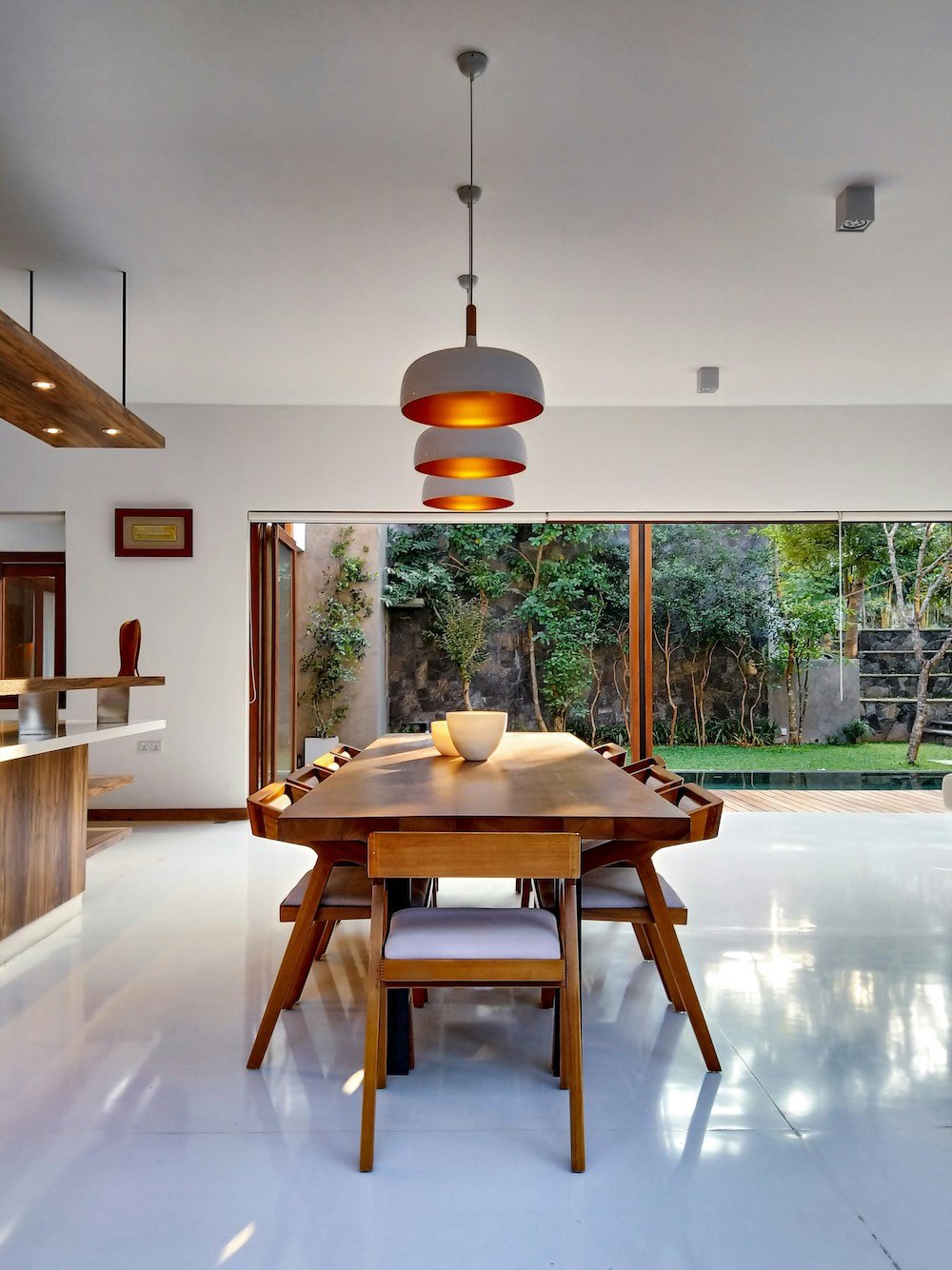
The Japandi dining room is built around a single foundational piece — the dining table — and everything else serves it. A clean-lined solid wood table with minimal detailing is the anchor. Oak and walnut are the most used materials. The table should feel honest: visible grain, no high-gloss finish, no decorative legs. It is there to be used, not admired.
The centrepiece is where most people under-invest — and where the biggest visual return is available. The three-element formula works consistently: one organic element, one functional element, and one textural base. For specific product picks and the full formula breakdown, our Japandi dining table centrepiece guide covers every element in detail.
Lighting above the dining table should be a pendant — warm, diffused, and hung low enough to feel intimate. Rice paper, linen, or handblown glass all work. Our complete Japandi lighting guide covers pendant positioning, height, and bulb selection in full.
How to style a Japandi bedroom
The Japandi bedroom has one goal above all others: genuine rest. Not the performance of rest — but a room that actually quiets the mind when you walk into it. Every design decision should serve that purpose.
Start with the bed. A low-profile platform bed frame in solid wood sits closer to the ground and creates the grounded quality that anchors the space. The bedding should be in linen or organic cotton, undyed or in the palest tones. No decorative cushion arrangements — one or two pillows in the same fabric family, nothing else on the bed during the day.
Lighting should be exclusively warm and low — bedside lamps, a small floor lamp in a reading corner, or a single dimmable pendant hung low over the bed. Never an overhead spotlight. Our Japandi floor lamps guide includes two picks specifically suited to bedroom corners.
For the full bedroom styling guide including storage, artwork placement, and textile layering, see our dedicated Japandi bedroom ideas article.
Japandi design in small spaces — why constraint is an advantage
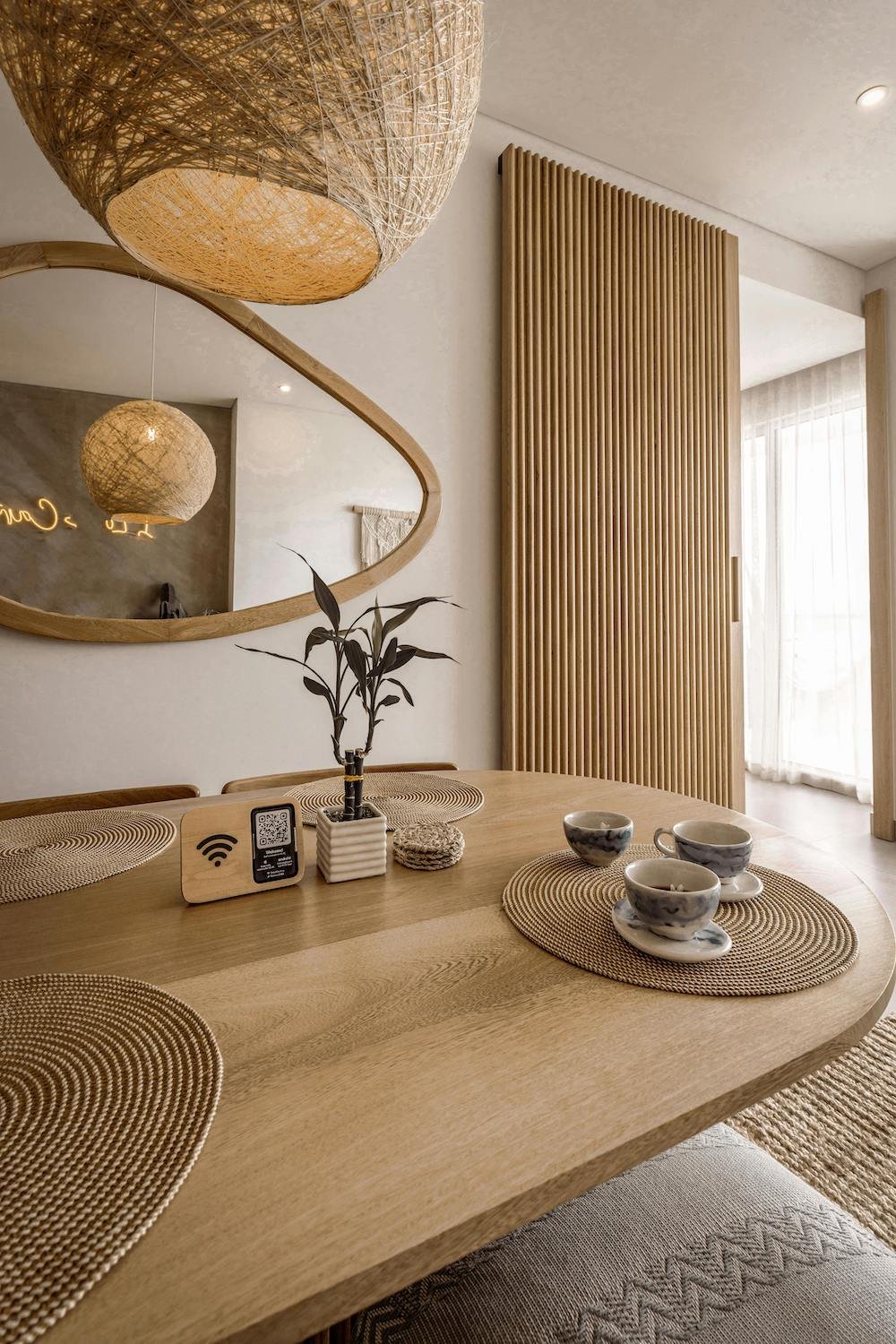
Japandi is one of the rare design philosophies that genuinely improves under spatial constraint. A large room with few objects can feel unfinished. A small room with few objects feels considered. The difference works entirely in your favour.
In a smaller space, every principle of Japandi design becomes more effective. Negative space reads more powerfully. Natural materials have more visual presence. Warm layered lighting feels more intimate. The room works harder — which means you can do less and achieve more.
Go lower with furniture
Low-profile furniture creates the illusion of more vertical space. A platform bed, a low Japandi coffee table, and a floor-level sofa all draw the eye across the room rather than interrupting the sightline. In a small space this single principle has more impact than any other.
Use multi-functional pieces
A wooden serving tray that doubles as a coffee table display. A storage ottoman that replaces a side table. A bench at the end of the bed that provides wardrobe overflow. Japandi rewards dual-purpose thinking — every piece should justify its floor space with more than one function.
Keep the palette tight
In a small space, colour variation reads as noise. The Japandi palette — beige, white, grey, warm wood tones — is particularly powerful in compact rooms because it removes visual interruptions that make a space feel smaller. Use your 10% accent colour sparingly and in one location only.
Prioritise vertical storage
Tall storage units that reach toward the ceiling draw the eye upward — making the ceiling feel higher. Closed storage is preferable to open shelving in a compact space; everything on an open shelf needs to be as considered as the furniture itself.
Layer light rather than relying on overhead
A single overhead light in a small room flattens the space and makes it feel exactly like what it is. Multiple warm light sources at different heights create visual depth. A Japandi floor lamp in one corner and a table lamp in another will do more than any ceiling fitting.
5 Japandi decorating principles to apply right now
These are the decorating decisions with the highest visual impact relative to cost and effort. Apply any one of them and you will feel the difference in the room. Apply all five and the space will feel genuinely transformed.
Principle 01
Bring nature inside with intention
Plants and organic elements are not decoration in a Japandi space — they are a connection to the natural world the entire aesthetic is built around. A single fiddle leaf fig in a large ceramic planter. Dried pampas grass stems in a narrow ikebana vase on your Japandi coffee table. Choose one organic element per surface — never more.
Principle 02
Use natural woven materials for warmth
Rattan, bamboo, seagrass, and jute introduce warmth and texture without colour. A vintage rattan accent chair in a living room corner. A jute planter on a side table. Woven pendant lights in a dining room. These materials signal handcraft and connection to nature at a fraction of the cost of solid wood furniture.
Principle 03
Use contrast deliberately, not decoratively
Japandi permits a single point of contrast — a statement rug in a deeper tone, a piece of minimal abstract wall art, or a single cushion in a muted accent colour. The contrast element earns its place by making the surrounding neutrals feel more alive. Think rust, deep tan, forest green, or black — never more than one at a time.
Principle 04
Choose lighting that serves the mood
Rice paper lamps, linen shades, handblown glass pendants — Japandi lighting is warm, diffused, and always in natural materials. Layer multiple sources: a Japandi floor lamp beside the sofa, a pendant over the dining table, a table lamp in the corner. For the full layering approach see our complete Japandi lighting guide.
Principle 05
Protect the negative space
This is the principle most often abandoned first. The empty wall. The clear surface. The corner with nothing in it. In Japandi design these are not failures of decorating — they are decisions as deliberate as everything else in the room. The Japanese concept of ma — the beauty of empty space — is at the heart of why these interiors feel the way they do. Protect the empty space. It is doing more work than anything you could put there.
Where to find genuine Japandi pieces — our curated guides
The principles above are straightforward to understand. Finding products that actually live up to them is harder. Every guide below has been curated against the same criteria — natural materials, honest craft, and correct Japandi proportions.
Living room
Japandi Coffee Tables →
10 verified Etsy picks in solid oak and walnut. One clear top recommendation.
Lighting
Japandi Floor Lamps →
5 lamps that earn the label — solid wood, linen shades, warm diffused light.
Dining room
Japandi Dining Centrepiece →
The three-element formula plus 6 product picks across organic, functional, and textural categories.
Lighting guide
Japandi Lighting Guide →
Colour temperature, the 5–7 light rule, and how to layer sources in every room.
Textiles
Japandi Rugs Guide →
The complete buying guide — materials, sizing, and how to anchor a Japandi room correctly.
Bedroom
Japandi Bedroom Guide →
Platform beds, linen bedding, storage solutions, and how to build a room that genuinely rests you.

Pingback: Japandi Bedroom Ideas: Create a Serene and Stylish Sanctuary | sabi.japandistylehomedecor
Pingback: 5 stunning Japandi Coffee Tables to Elevate Your Living Room | sabi.japandistylehomedecor
Pingback: Japandi Floor Lamps: The 5 Best ambient picks