Top 10 Wabi-Sabi Wall Art Pieces
on Amazon & Etsy (2026)
Disclosure: This article contains affiliate links. If you purchase through our links we may earn a small commission at no extra cost to you. We only recommend pieces that genuinely reflect the wabi-sabi aesthetic — natural, handmade, and quietly beautiful.
The right piece of wall art can define the entire feel of a room. In a wabi-sabi interior, the wall is not a gallery — it is a breathing surface. One or two considered pieces, chosen for their natural texture, organic form, and honest imperfection, do more than an entire gallery wall of mass-produced prints.
Wabi-sabi wall art is not about perfection of composition or technical precision. It is about the piece that catches light differently at different times of day. The ceramic form that shows the hand of its maker. The abstract canvas that holds the texture of raw earth. As Dezeen’s coverage of the wabi-sabi movement has shown, the global appetite for this kind of quiet, meaningful art has never been stronger.
We’ve curated the ten best wabi-sabi wall art pieces available on Amazon and Etsy right now — across every budget, material, and room type. Each one has been chosen to sit naturally within the wabi-sabi philosophy of imperfect, transient beauty.
What to Look for in Wabi-Sabi Wall Art
Not every neutral-toned print qualifies as wabi-sabi. The philosophy has specific qualities that separate the genuine from the trend-adjacent. When shopping for wabi-sabi wall art, look for these four things.
The four hallmarks of authentic wabi-sabi wall art
- Evidence of the hand. Brush marks, throwing marks, torn edges, weave texture — any quality that shows a human made this, not a machine. Mass-produced prints that merely use earthy colours are not wabi-sabi.
- Natural materials. Unglazed clay, natural rattan, linen canvas, washi paper, dried botanicals. The material should have come from the earth and aged honestly.
- Organic, asymmetric form. Wabi-sabi resists the perfectly centred, the precisely symmetrical, the geometrically flawless. The piece that is slightly uneven, slightly irregular, is the more interesting one.
- Texture over image. The best wabi-sabi wall art is often more sculptural than pictorial — it changes with the light rather than communicating a fixed subject. A dimensional plaster panel, a woven rattan circle, a ceramic slab — these are as valid as any framed print.
As Kinfolk magazine has long argued, the objects we put on our walls are an extension of what we value. In a wabi-sabi home, the wall asks not “is this impressive?” but “is this alive?”
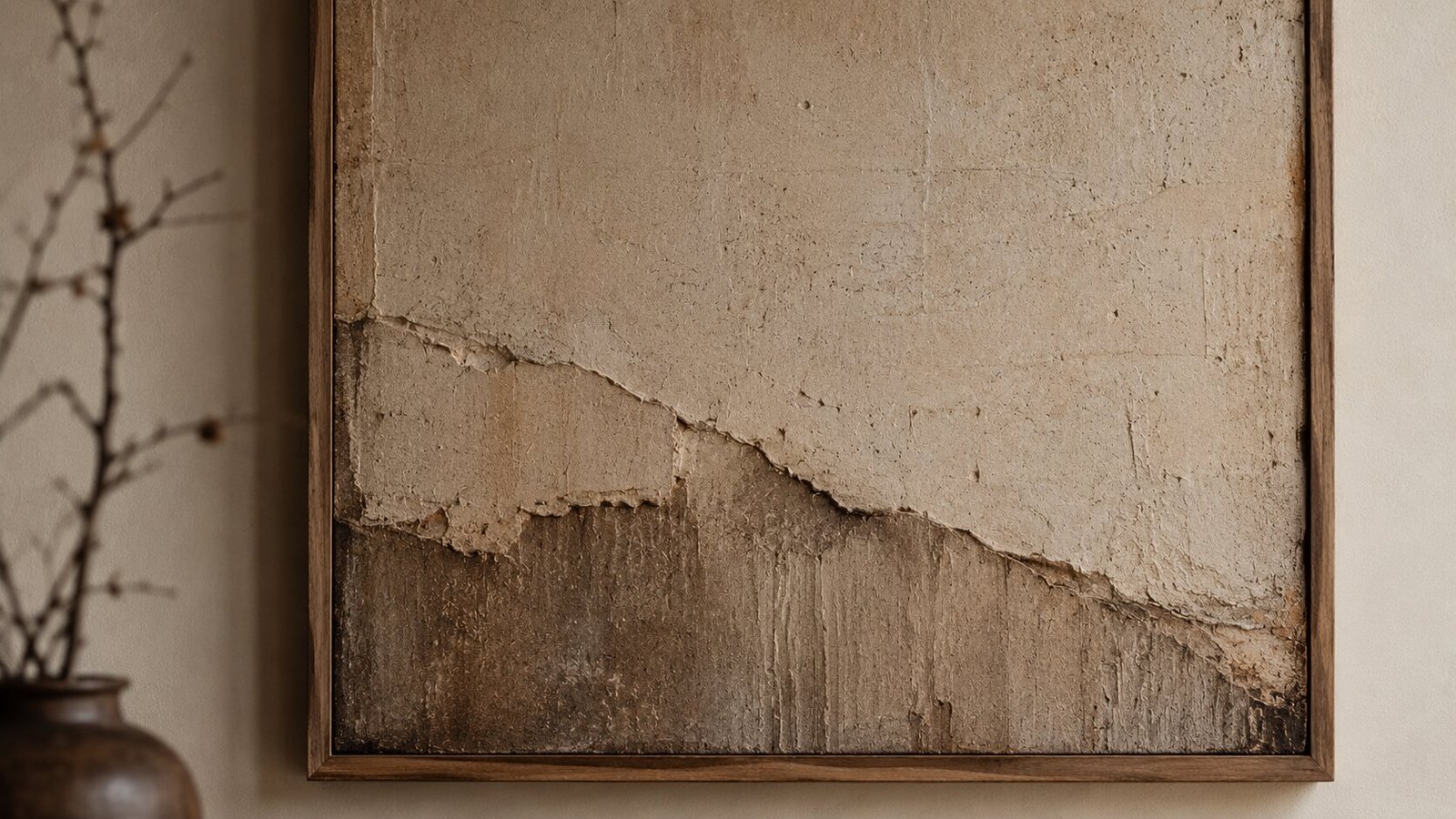
The surface of a handmade wabi-sabi wall piece up close — imperfect, textural, and alive with the marks of its making.
The Top 10 Wabi-Sabi Wall Art Pieces
These ten pieces span a range of materials, budgets, and scales — from a statement large wall art canvas to a small handmade ceramic piece for a bedside wall. All are available now on Amazon or Etsy with fast shipping to Australia, the US, and the UK.
 1
Amazon
1
Amazon
Amazon
Large Abstract Canvas Print — Earthy Organic Brushstroke
Best for: a statement wall above a sofa or bed
This oversized canvas captures the wabi-sabi spirit in paint — warm sand, clay, and raw ochre tones in an abstract brushstroke composition that reads differently in different light. The texture of the canvas surface adds tactile depth you can see from across the room. Available in multiple sizes up to 150cm wide, making it one of the strongest options for large wabi-sabi wall art.
Shop on Amazon →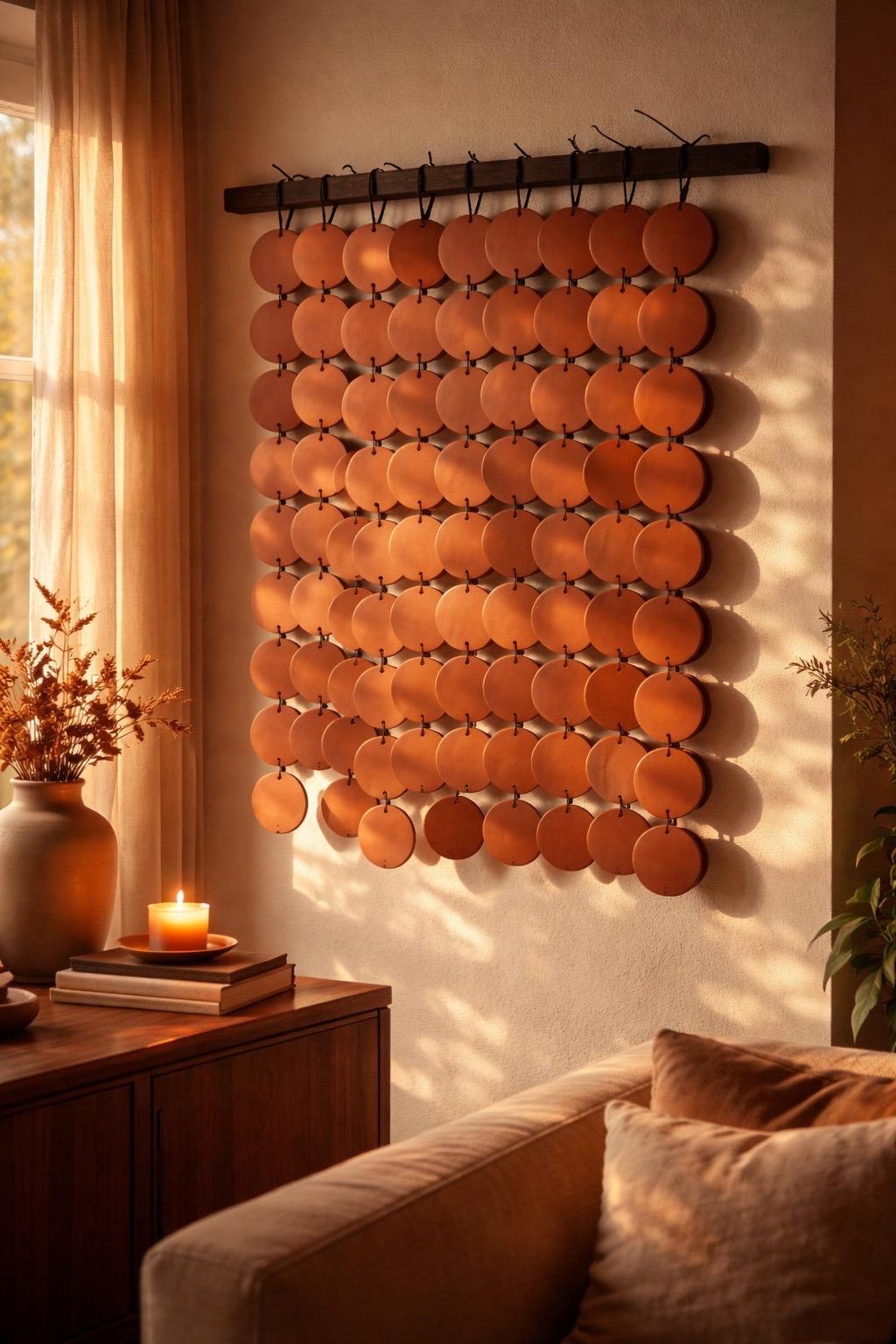 2
Etsy
2
Etsy
Etsy
Handmade Ceramic Wall Hanging — Unglazed Clay Disc
Best for: a bedside wall, hallway, or shelf niche
A wheel-thrown or hand-formed ceramic disc in raw unglazed clay — the kind of piece that sits somewhere between sculpture and wall art. Each one carries the marks of its making: slight surface texture, organic edge, the warmth of fired earth. Hangs on a natural cord. This is wabi-sabi wall art in its purest expression — handmade, imperfect, alive.
Shop on Etsy →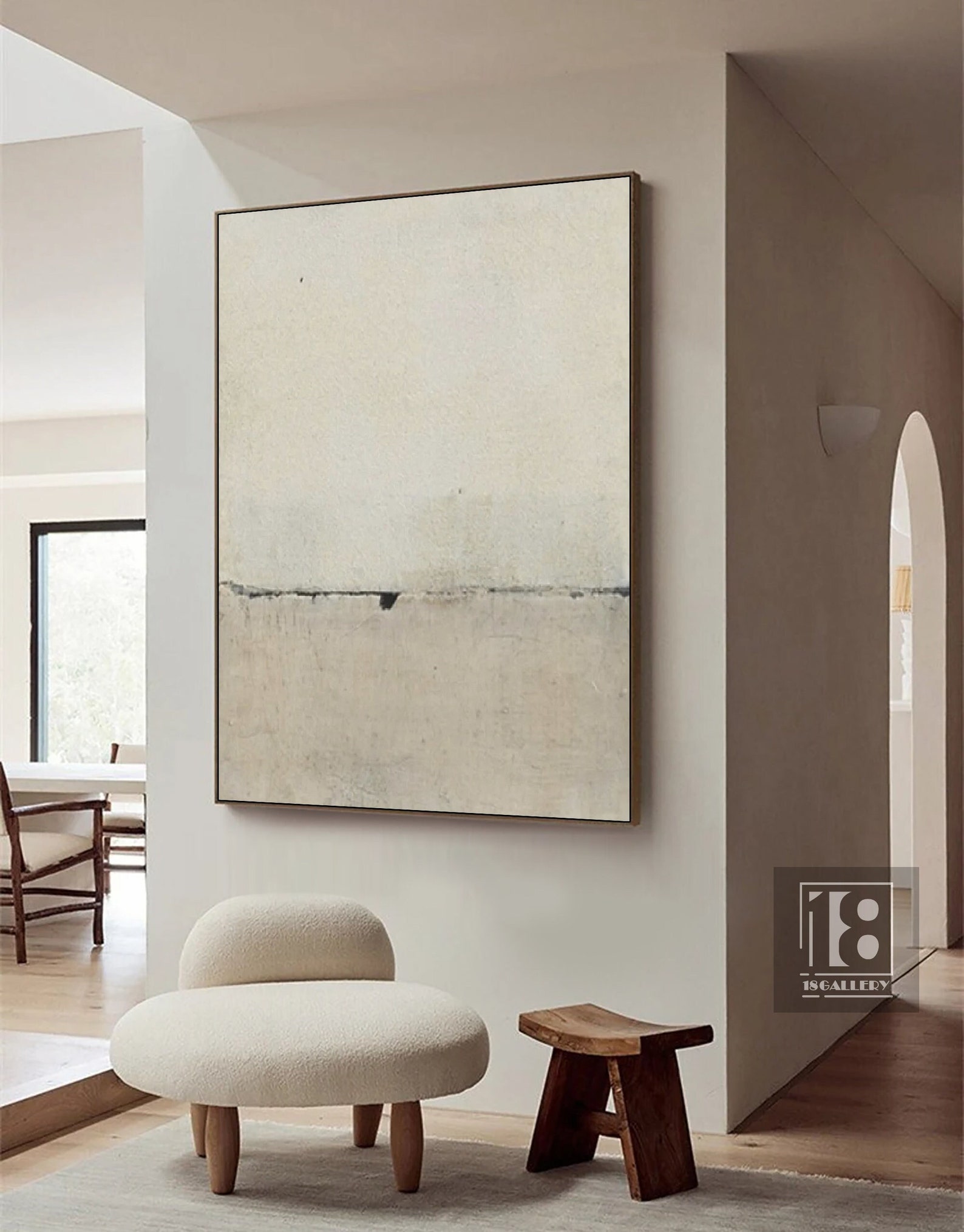 3
Etsy
3
Etsy
Etsy
Textured Plaster Wall Art Panel — Dimensional Neutral
Best for: a living room feature wall or dining area
One of the most requested types of wabi-sabi large wall art right now — a dimensional plaster-effect panel that creates depth and shadow rather than presenting an image. The tactile surface catches raking light beautifully, shifting in tone from morning to evening. In warm cream or dusty white, it anchors a wall without dominating it. Arrives ready to hang.
Shop on Etsy →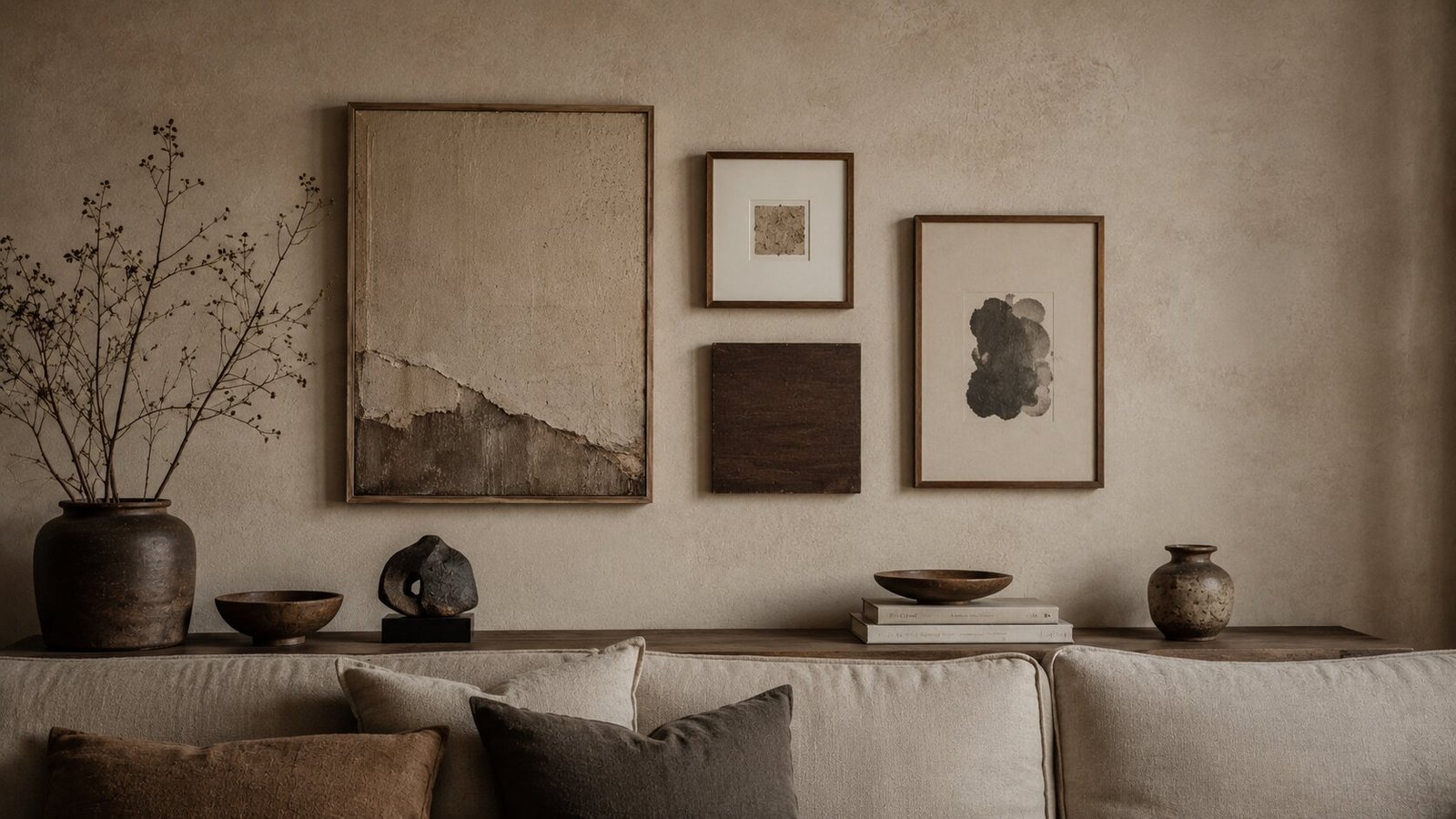
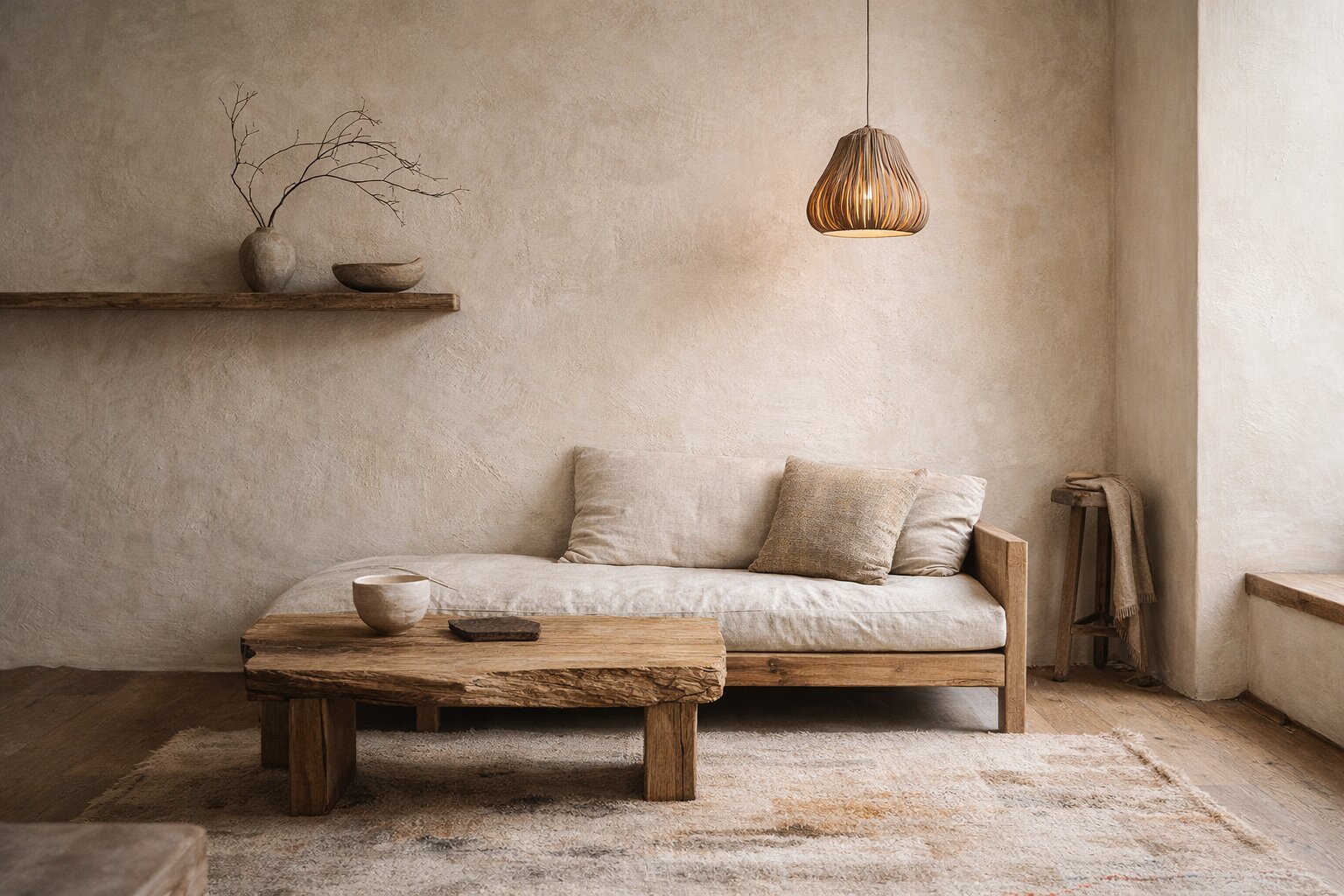
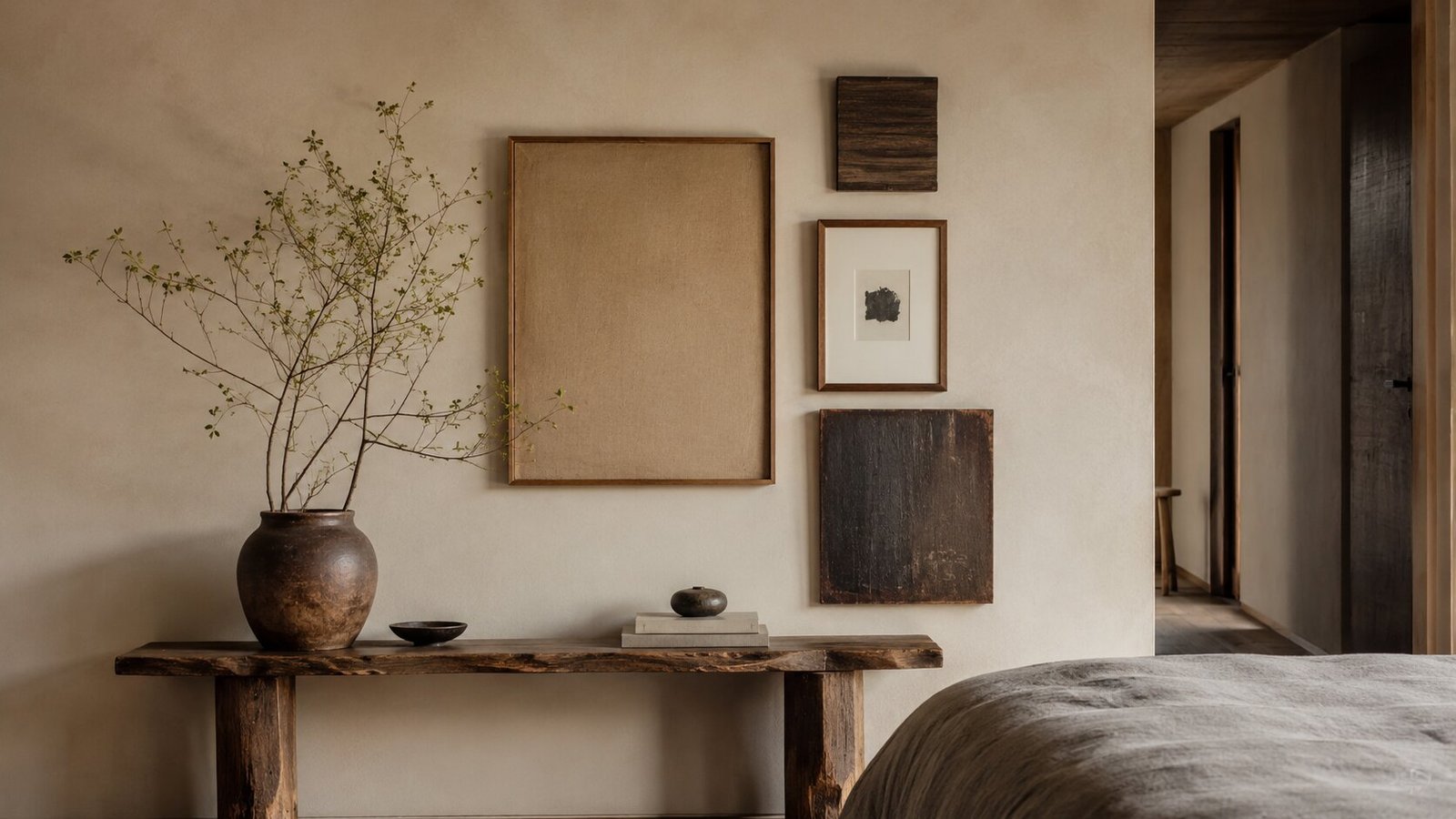
Mixing large and small wabi-sabi wall art pieces in a loose, asymmetric arrangement — the variety of scale creates depth without visual noise.
 4
Amazon
4
Amazon
Amazon
Japanese Ink Brush Print — Minimalist Sumi-e Style
Best for: a study, reading corner, or meditation space
Sumi-e ink painting — the traditional Japanese art of expressing the essence of a subject in the fewest possible brushstrokes — is one of the most philosophically aligned art forms with the wabi-sabi aesthetic. This print captures that quality: a single gesture, deliberate negative space, and the visible pressure of the brush. Framed or unframed options available.
Shop on Amazon →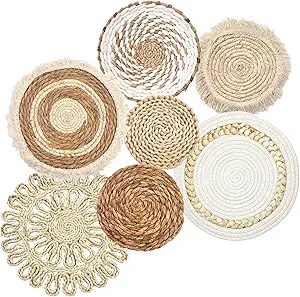 5
Amazon
5
Amazon
Amazon
Rattan Woven Wall Hanging — Natural Fibre Round
Best for: a kitchen, entryway, or above a low console
Rattan wall hangings sit at the intersection of art and craft — their hand-woven texture creates visual depth and warmth that no flat print can replicate. This natural round form casts gentle shadows as the light moves and brings the organic texture of the natural world directly onto the wall. Works beautifully as part of a grouped arrangement of different sizes.
Shop on Amazon →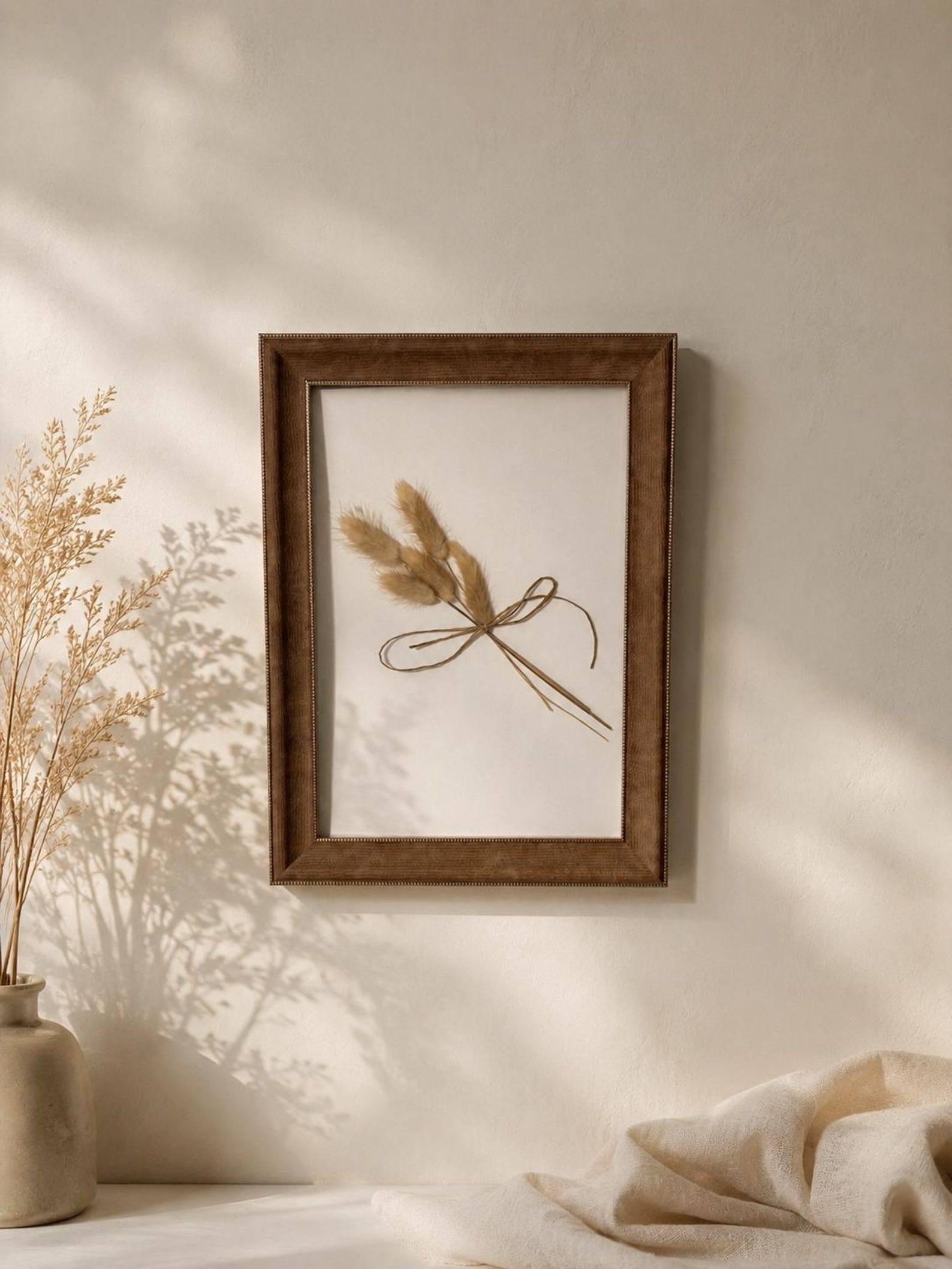 6
Etsy
6
Etsy
Etsy
Dried Botanical Framed Print — Pressed & Preserved
Best for: a bedroom, bathroom, or quiet reading corner
Pressed and preserved botanicals in a simple natural frame — this is wabi-sabi wall art that holds time literally. Each botanical specimen carries the marks of its season: a slight asymmetry, a natural colour variation, the imperfect shape of something that grew rather than was manufactured. On a neutral linen or cream background, this piece brings the outside world quietly indoors.
Shop on Etsy →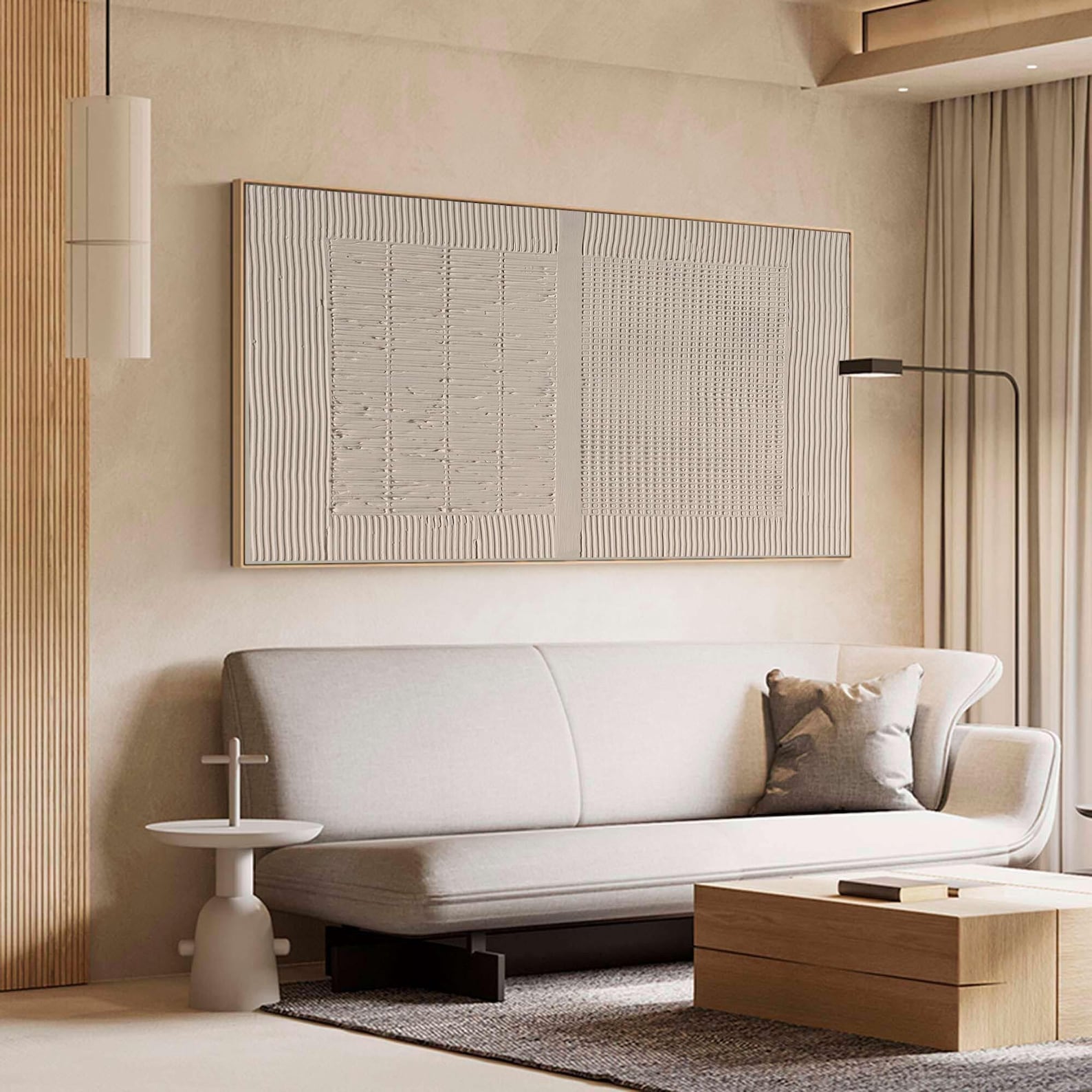 7
Etsy
7
Etsy
Etsy
Large Linen Canvas — Abstract Impasto Texture
Best for: a statement living room or bedroom feature wall
An impasto-textured linen canvas in warm neutral tones — the paint is built up in layers, creating a surface that is as tactile as it is visual. The kind of piece that rewards time spent looking at it. Available in large format sizes, this is a strong choice for anyone seeking substantial wabi-sabi large wall art that doesn’t shout. Handmade by an independent artist.
Shop on Etsy → 8
Amazon
8
Amazon
Amazon
Minimal Macramé Wall Hanging — Natural Undyed Cotton
Best for: a bedroom, nursery, or soft living space
A restrained macramé piece in natural undyed cotton — not the maximalist fringe of years past, but a considered, minimal form that brings soft texture to a wall without dominating it. The natural cotton ages gently and picks up the warm tones of the room. Works especially well in a wabi-sabi bedroom where softness and texture are the design language.
Shop on Amazon →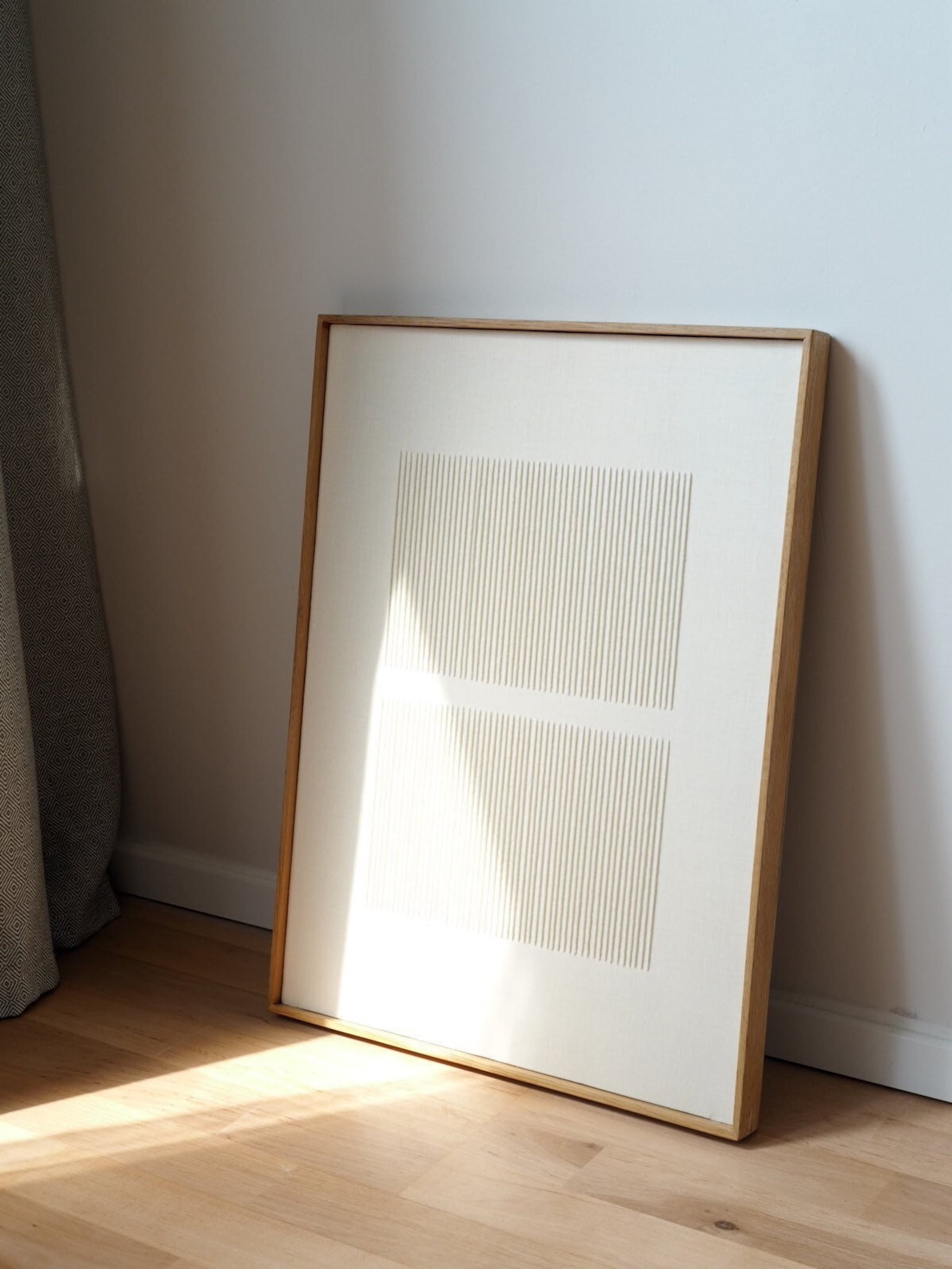 9
Etsy
9
Etsy
Etsy
Washi Paper Wall Art — Torn Edge Handmade Framed
Best for: a study, hallway, or alongside other small pieces
Washi — traditional Japanese paper made from natural plant fibres — carries the imperfection of its making in every torn edge and fibrous texture. This framed piece uses washi as its primary material, either as background or subject, with a naturally irregular edge that no machine could replicate. Quiet, deeply considered, and unmistakably wabi-sabi. As Architectural Digest notes, washi paper is one of the most historically authentic materials in Japanese interior tradition.
Shop on Etsy →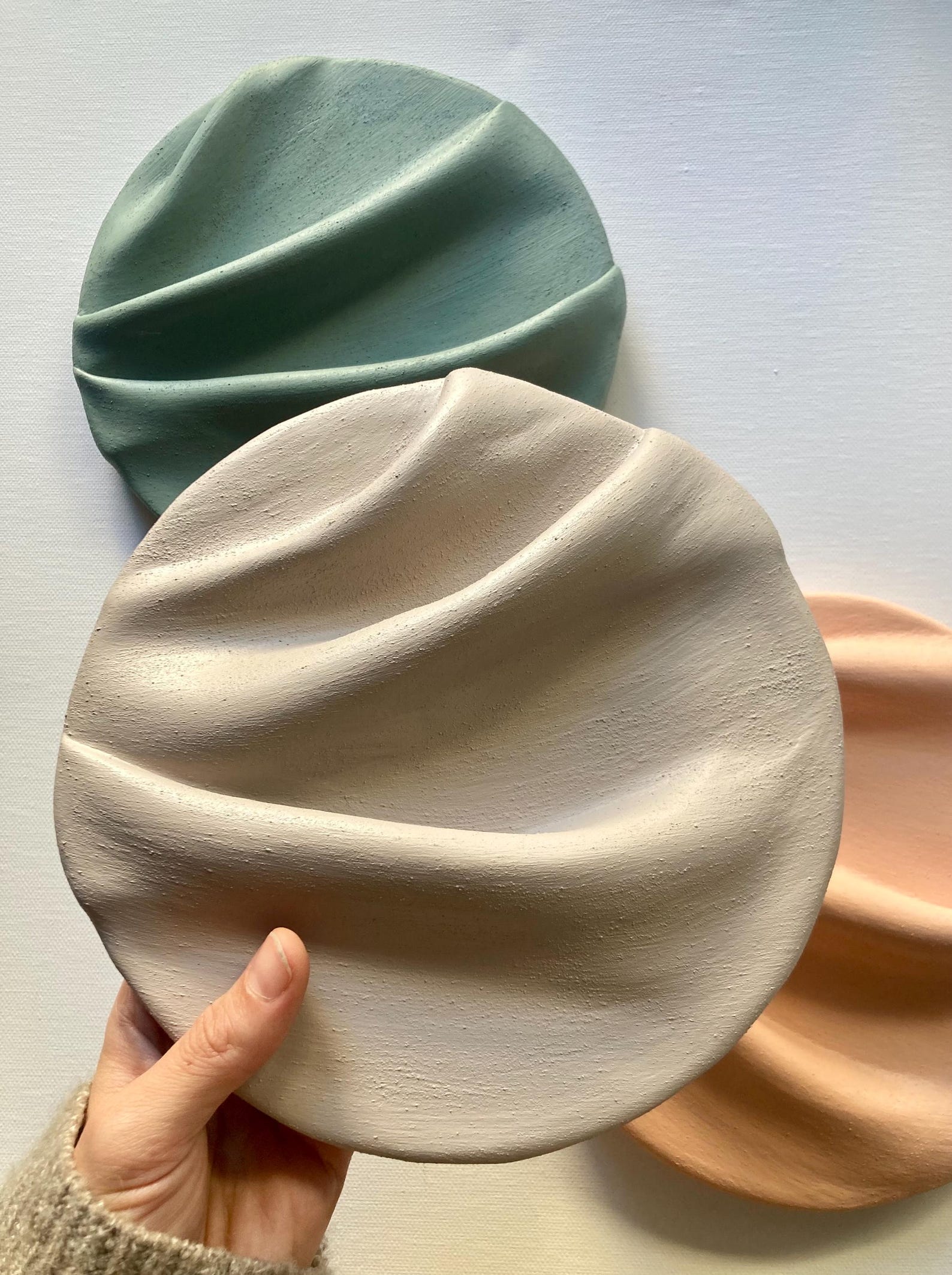 10
Etsy
10
Etsy
Etsy
Ceramic Sculptural Wall Piece — Matte White Clay Moon
Best for: a bedroom, meditation space, or above a low shelf
A handmade ceramic wall sculpture in matte white clay — organic in form, slightly irregular, quietly luminous on a wall. This is the piece that makes a room feel considered rather than decorated. The surface texture catches shadow in low evening light in a way that changes the whole mood of a space. Each piece is unique, hand-formed, and arrives with a simple cord hanger. A beautiful final touch in a wabi-sabi interior.
Shop on Etsy →How to Style & Hang Wabi-Sabi Wall Art
In a wabi-sabi interior, the instinct to fill a wall should be resisted. One considered piece with generous space around it carries far more presence than a busy gallery arrangement. The empty wall around the art is as intentional as the art itself — in Japanese aesthetics, this principle is known as ma, the meaningful use of negative space.
Wabi-sabi wall art styling rules
- One anchor, two accents at most. Choose one statement piece for the primary wall and let it breathe. If you layer, use odd numbers — one large piece flanked by two smaller ones at different heights.
- Hang lower than convention. Wabi-sabi interiors favour a grounded, low centre of gravity. Hanging art at eye level when seated (around 140–150cm from floor to centre) feels more intimate and considered than the standard 160cm rule.
- Mix materials, keep tones unified. A ceramic wall disc, a rattan hanging, and a textured canvas can coexist beautifully if they share the same warm neutral tonal family.
- Leave walls intentionally empty. Not every wall needs art. A single bare wall beside a textured piece creates contrast that makes both more visible.
- Let natural light do the work. Wabi-sabi wall art — especially dimensional and textured pieces — changes with the light. Position pieces where morning or afternoon raking light will catch the texture surface.
A single wabi-sabi piece in a hallway, lit by low natural light — the earthy tones and organic texture create a quiet moment of beauty in a transitional space.
Choosing Large Wabi-Sabi Wall Art
Large wabi-sabi wall art requires a different kind of restraint. The temptation with a large wall is to fill it — but in a wabi-sabi room, a single oversized piece with bare wall on either side is almost always more powerful than multiple pieces competing for attention.
For large format, the best material choices are linen or raw canvas (Products 1 and 7 above), dimensional plaster panels (Product 3), or a large rattan or woven piece that brings organic texture at scale. Avoid large photographic prints — they tend to read as decorative rather than considered, and sit outside the wabi-sabi philosophy of natural materials and handmade character.
Scale your art to your furniture, not your wall. A large canvas should be approximately two-thirds the width of the sofa or console beneath it. Our full guide to wabi-sabi interior design covers how art, furniture, and lighting work together to create a cohesive calm space. For those who also love the more structured approach of Japandi, our wabi-sabi vs Japandi comparison shows how art choices differ between the two styles.
Frequently Asked Questions
What is wabi-sabi wall art?
Wabi-sabi wall art is any piece chosen for its natural materials, organic form, handmade quality, and honest imperfection — rather than for technical precision or decorative perfection. It includes handthrown ceramic wall hangings, abstract canvas with visible brushwork, woven rattan pieces, dried botanical prints, textured plaster panels, and Japanese ink brush prints. The unifying quality is that each piece shows evidence of its making and sits comfortably with the marks of time and nature.
Where is the best place to hang wabi-sabi wall art?
The most impactful placement is above a low sofa, console, or shelf — hung slightly lower than conventional gallery height (around 140–150cm to centre rather than 160cm) to create a grounded, intimate feeling. Wabi-sabi art works best with generous empty wall space around it; resist the urge to fill the wall. Position dimensional or textured pieces where natural light will rake across the surface, as this reveals the texture and creates atmosphere that changes through the day.
What size wall art works best for a wabi-sabi living room?
For a wabi-sabi living room, a single large canvas or textured panel approximately two-thirds the width of the sofa beneath it is the most considered approach. This typically means 120–150cm wide for a standard three-seat sofa. Avoid going too small — a piece that feels undersized on a wall creates visual tension rather than calm. If you prefer smaller pieces, group three items of different sizes and materials in a loose, asymmetric arrangement rather than a formal grid.
Can you mix wabi-sabi wall art with Japandi decor?
Yes — wabi-sabi wall art often enhances a Japandi interior by adding the warmth and organic texture that Japandi’s cleaner lines can lack. A handmade ceramic wall piece or a textured linen canvas sits naturally within a Japandi room as long as it stays within the same warm-neutral palette. The key is choosing a piece with restraint — one organic, textural work in a Japandi room adds depth; several competing pieces would disrupt the considered calm that defines the style.
Is wabi-sabi wall art available on Amazon and Etsy?
Yes — both platforms have strong selections of wabi-sabi wall art, with different strengths. Etsy is the better source for genuinely handmade, one-of-a-kind pieces like ceramic wall hangings, washi paper art, and original textured canvases from independent artists. Amazon offers better value for large format prints, rattan hangings, and macramé pieces where fast shipping and competitive pricing are priorities. The ten pieces in this edit draw from both to give you the broadest and best selection.
One Piece. One Wall. One Decision.
The most common mistake when decorating a wabi-sabi wall is doing too much. The philosophy asks you to choose one piece you genuinely love — not a set, not a collection, not a trend-led gallery wall — and let it live on a wall with enough space around it to breathe.
Whether that piece is a handthrown ceramic disc, an oversized linen canvas, or a single pressed botanical in a simple frame, the most important quality is that it feels honest. Made by hand. True to its material. Comfortable with its own imperfection.
That is wabi-sabi. And there is nothing more beautiful for a wall.
→ Read the complete wabi-sabi living guide · Shop the wabi-sabi home edit