
Japandi Furniture 2026: Buyers guide for minimal living.
Contents
- 1 Japandi Furniture 2026: Buyers guide for minimal living.
- 1.1 What Is Japandi Furniture? Understanding the Style
- 1.2 Core Principles of Japandi Furniture Design
- 1.3 Essential Japandi Furniture Pieces for Every Room
- 1.4 Understanding Japandi Furniture Materials
- 1.5 Budget-Friendly Japandi Furniture Shopping
- 1.6 Color Palettes and Textile Integration
- 1.7 Room-by-Room Furniture Planning
- 1.8 Maintenance and Care for Japandi Furniture
- 1.9 Where to Shop for Quality Japandi Furniture
- 1.10 Future Trends in Japandi Furniture
- 1.11 Conclusion: Building Your Perfect Japandi Furniture Collection
Japandi furniture transforms ordinary homes into serene sanctuaries where Japanese minimalism meets Scandinavian comfort. This comprehensive guide helps you navigate the world of Japandi furnishings, from budget-friendly finds to investment pieces that will enhance your space for decades.
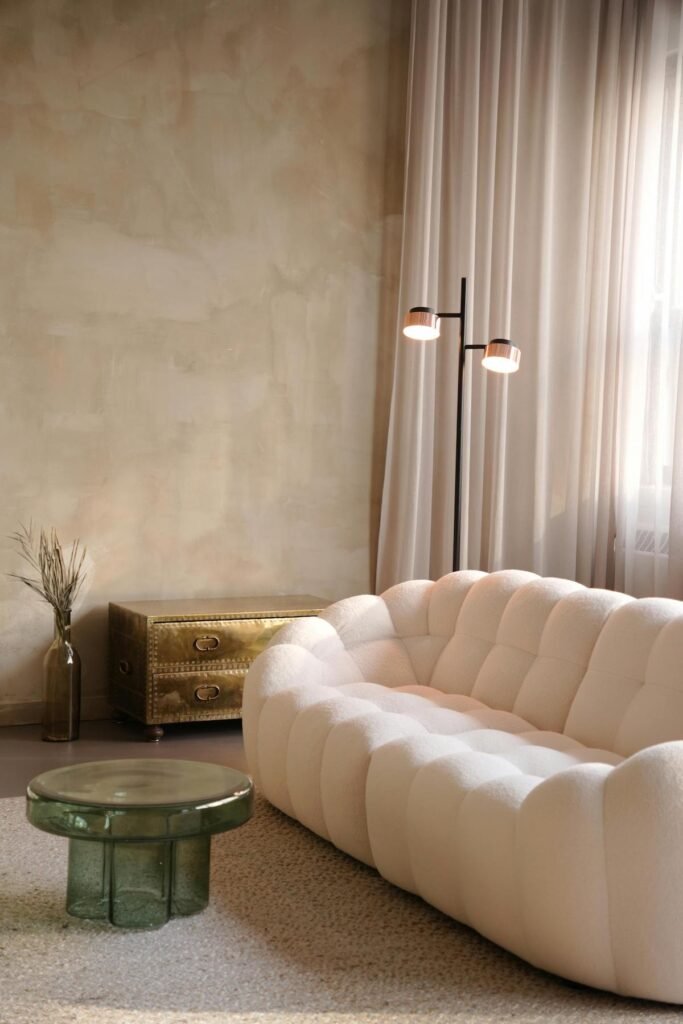
Written by Anzella Casica, certified interior design specialist from ANEC Interior Design Studio
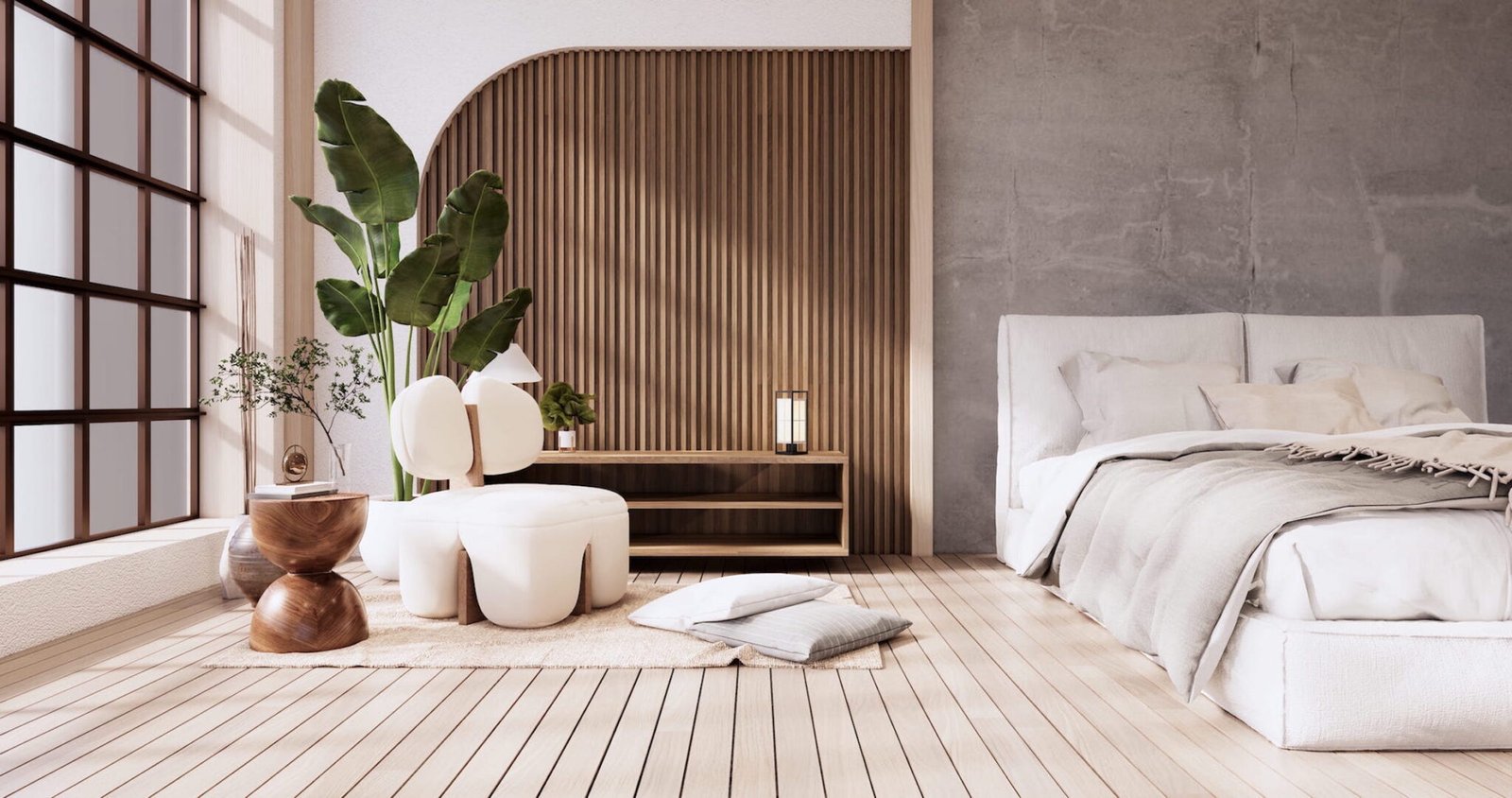
Whether you’re furnishing your first apartment or refreshing your family home, understanding Japandi furniture principles ensures every purchase supports your vision of mindful, beautiful living. You’ll discover how to choose pieces that work together harmoniously while staying within your budget and lifestyle needs.
What Is Japandi Furniture? Understanding the Style
Japandi furniture embodies the perfect marriage between Japanese wabi-sabi philosophy and Scandinavian hygge principles. This design approach creates pieces that feel both sophisticated and approachable, combining the clean lines of minimalism with the warmth of natural materials. the japandi design principles are rooted in balance but do not forsake beautiful design.
The Japanese influence brings appreciation for craftsmanship, natural imperfections, and the beauty of aging materials. Meanwhile, Scandinavian design contributes practical functionality, comfort, and light-enhancing qualities that make homes feel welcoming rather than stark.
Furthermore, authentic Japandi furniture prioritizes quality over quantity. Each piece serves multiple purposes while maintaining visual simplicity. This approach naturally supports sustainable living by encouraging thoughtful purchases that last for generations rather than fast furniture replacements.
Most importantly, Japandi furniture creates emotional connections between inhabitants and their spaces. These pieces invite you to slow down, appreciate natural beauty, and find peace in everyday routines—exactly what busy modern families need. japandi design flows effortlessly between japandi decor & functionality.
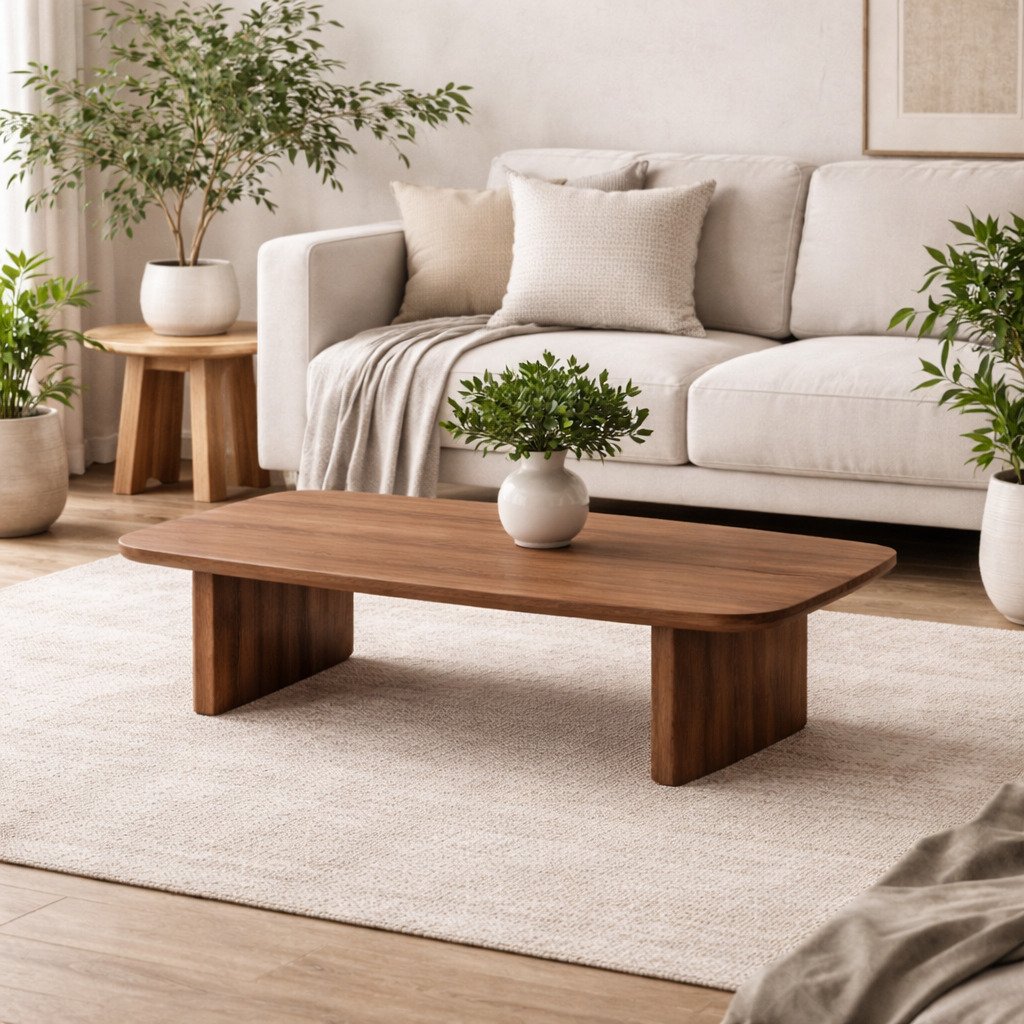
Core Principles of Japandi Furniture Design
Natural Materials Form the Foundation
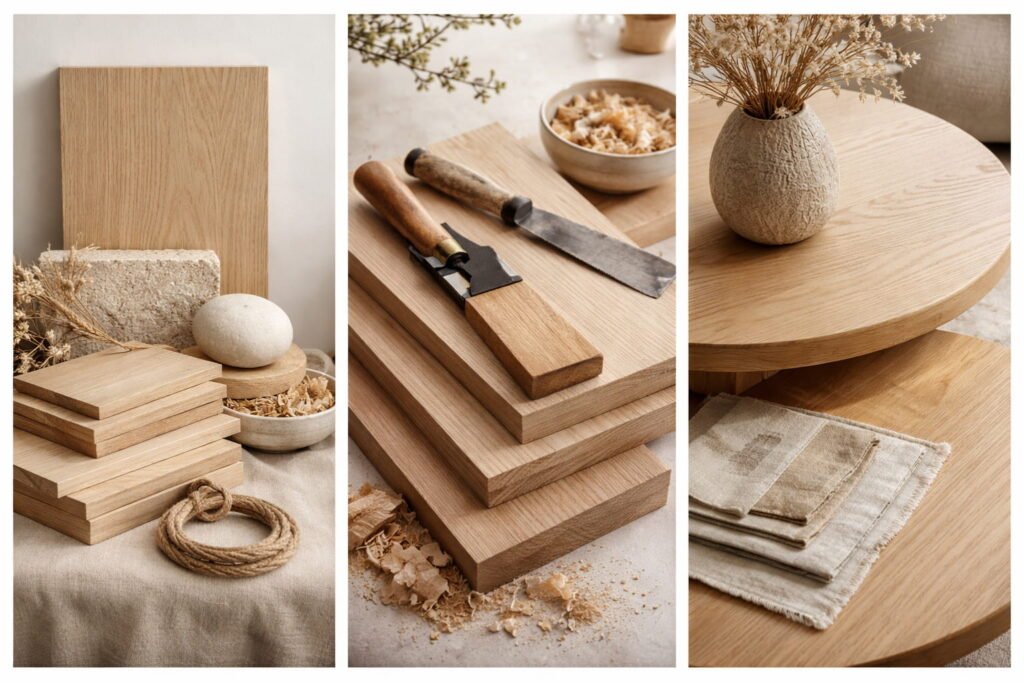
Japandi furniture celebrates organic materials that connect interior spaces with the natural world. Light woods like oak, ash, and bamboo create airy, spacious feelings while darker options such as walnut and teak provide sophisticated contrast and grounding energy.
Natural wood Japandi furniture showcases grain patterns and subtle color variations that make each piece unique. These characteristics tell stories of the tree’s growth and the craftsperson’s skill, creating furniture with genuine personality rather than mass-produced uniformity.
Beyond wood, Japandi pieces incorporate other natural elements like rattan, jute, linen, and stone. These materials age gracefully, developing rich patinas and textures that enhance rather than diminish their beauty over time. Additionally, they support healthy indoor air quality compared to synthetic alternatives.
The key lies in choosing materials that feel authentic to touch and sight. Genuine materials engage your senses in ways that artificial substitutes cannot, creating deeper satisfaction and connection with your furnishings.
Functional Minimalism
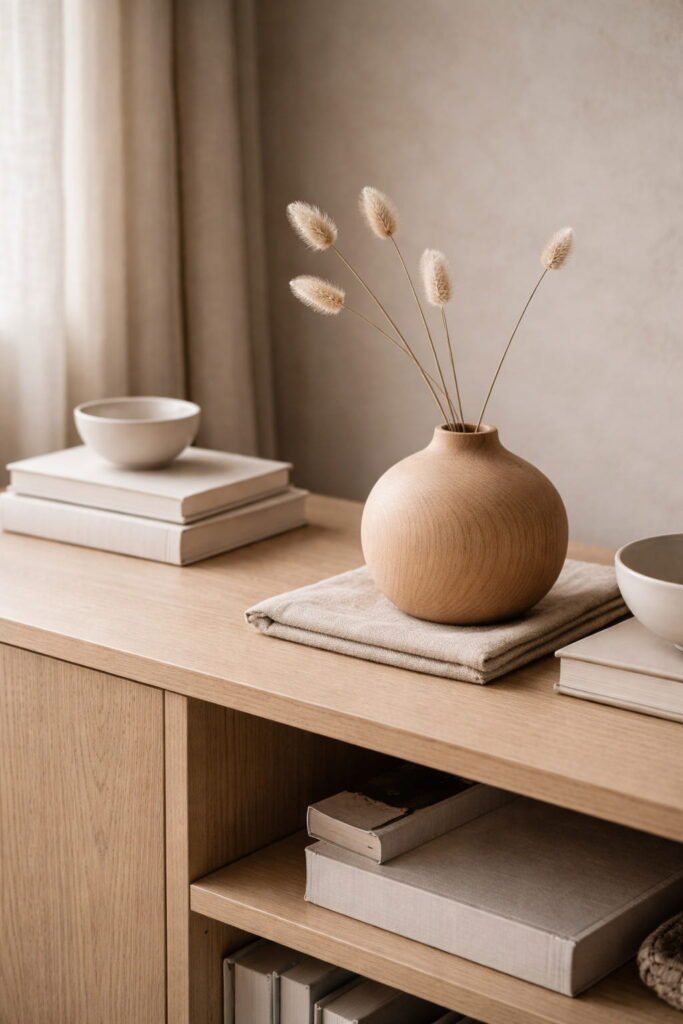
Every Japandi furniture piece must justify its presence through both beauty and utility. This principle eliminates decorative elements that serve no practical purpose while ensuring each piece contributes meaningfully to daily life.
Storage integration exemplifies this approach perfectly. Coffee tables include hidden compartments, beds feature built-in drawers, and dining tables offer extendable leaves for entertaining. These functional features maintain clean visual lines while addressing real-world needs.
Moreover, minimalist Japandi furniture embraces versatility. Benches serve as seating, storage, and occasional tables. Sideboards function as media consoles, bar carts, and display surfaces. This flexibility proves especially valuable in small spaces or rental properties where adaptability matters.
The goal isn’t owning fewer pieces for its own sake, but rather ensuring every piece earns its place through genuine usefulness and beauty.
Clean Lines and Geometric Forms
Japandi furniture favors simple, geometric shapes that create visual calm and timeless appeal. Rectangular, square, and circular forms dominate, with occasional organic curves that echo natural shapes without becoming ornate.
These clean lines serve practical purposes beyond aesthetics. Simple forms are easier to manufacture well, cost less to produce, and integrate seamlessly with existing furnishings. Furthermore, geometric shapes photograph beautifully for social media sharing—important for homeowners who love showcasing their spaces.
Additionally, clean-lined furniture ages more gracefully than ornate alternatives. Trends in decorative details change rapidly, but simple forms remain relevant across decades. This longevity protects your investment while reducing the urge to replace pieces frequently.
The discipline of geometric simplicity actually enhances rather than limits design possibilities, creating endless opportunities for beautiful, functional arrangements.
Essential Japandi Furniture Pieces for Every Room
Creating Your Japandi Living Room
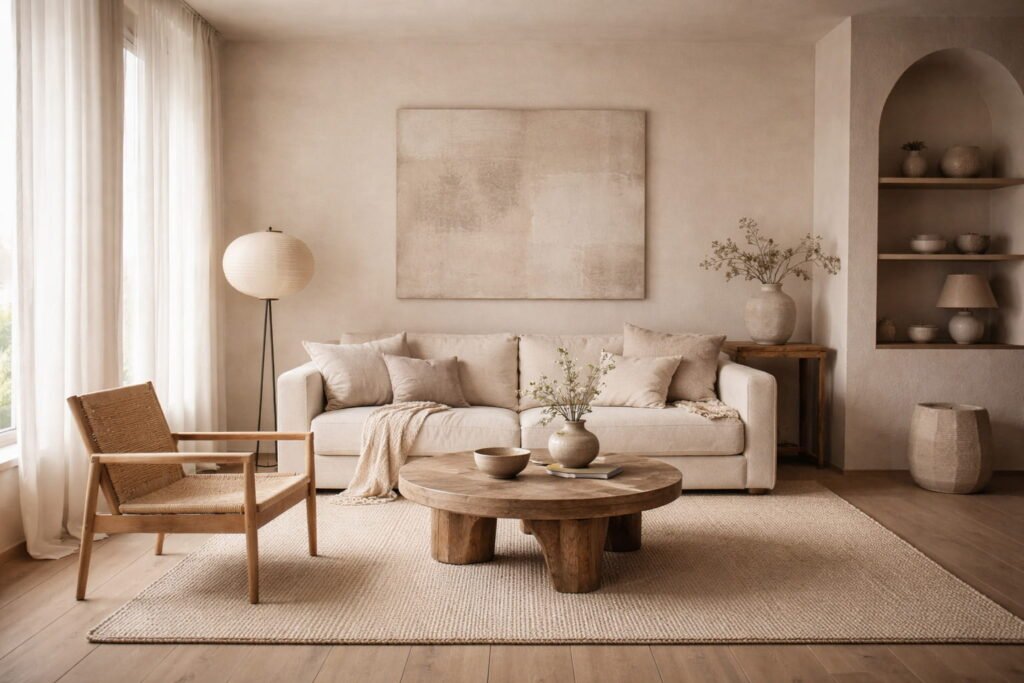
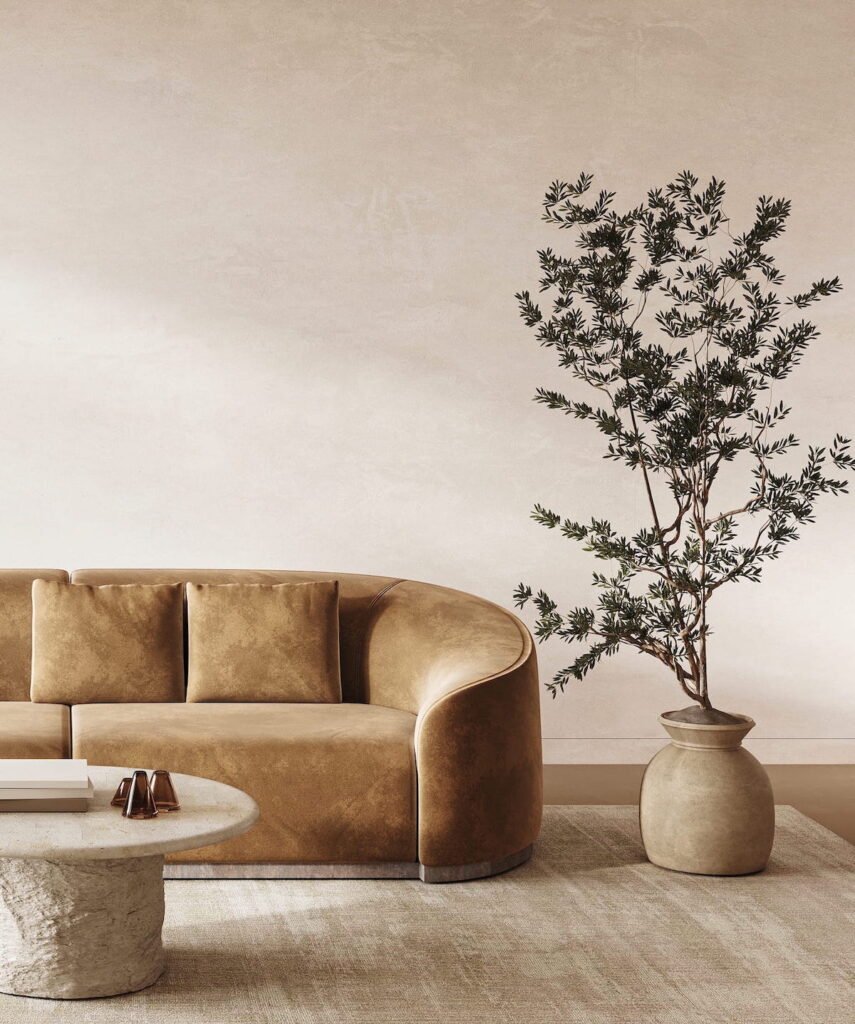
The living room serves as your home’s social heart, making furniture choices crucial for both daily comfort and entertaining success. Start with a low-profile sofa in natural linen or cotton that invites relaxation while maintaining the style’s clean aesthetic.
Choose seating with wooden legs or frames to reinforce the natural material connection. Modular options provide flexibility for different occasions while extendable or sectional pieces accommodate growing families without overwhelming compact spaces.
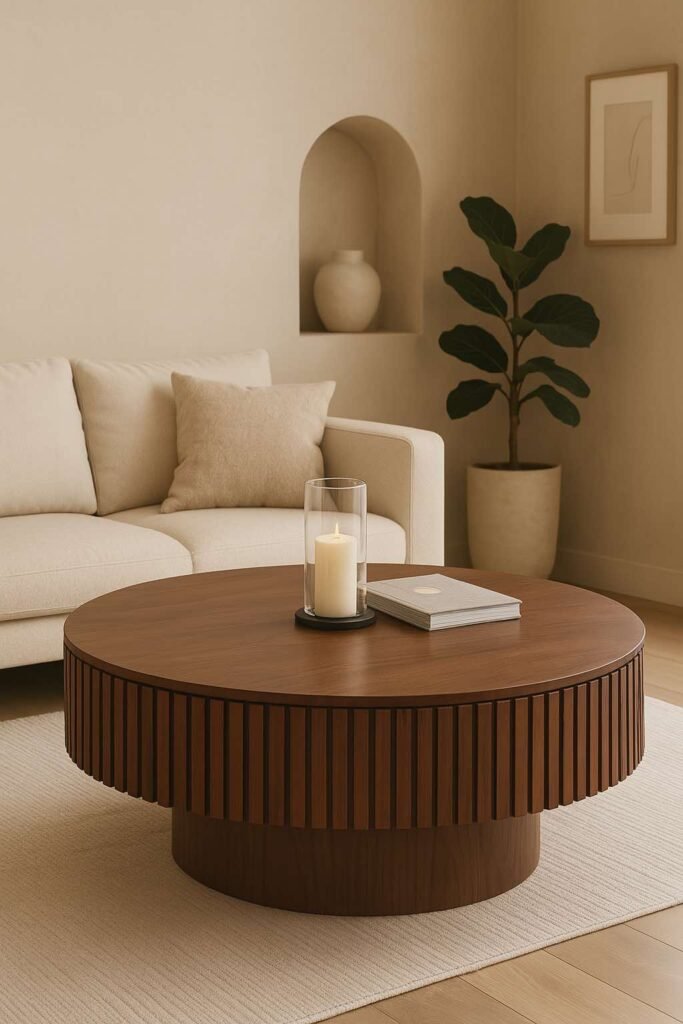
japandi Coffee tables anchor living room arrangements while providing essential storage and display surfaces. Look for pieces with built-in shelving or drawers that keep remote controls, magazines, and daily necessities organized yet accessible. Natural wood options with visible grain patterns create perfect focal points.
For comprehensive guidance on selecting living room pieces, explore our detailed Japandi living room furniture guide, which covers everything from sofa sizing to storage solutions that maintain your space’s serene atmosphere.
Storage furniture completes the living room foundation. Sideboards and media consoles with closed compartments hide entertainment equipment and daily clutter while open shelving displays curated objects like ceramics, books, or plants. The balance between hidden and visible storage maintains visual calm while accommodating real-life needs.
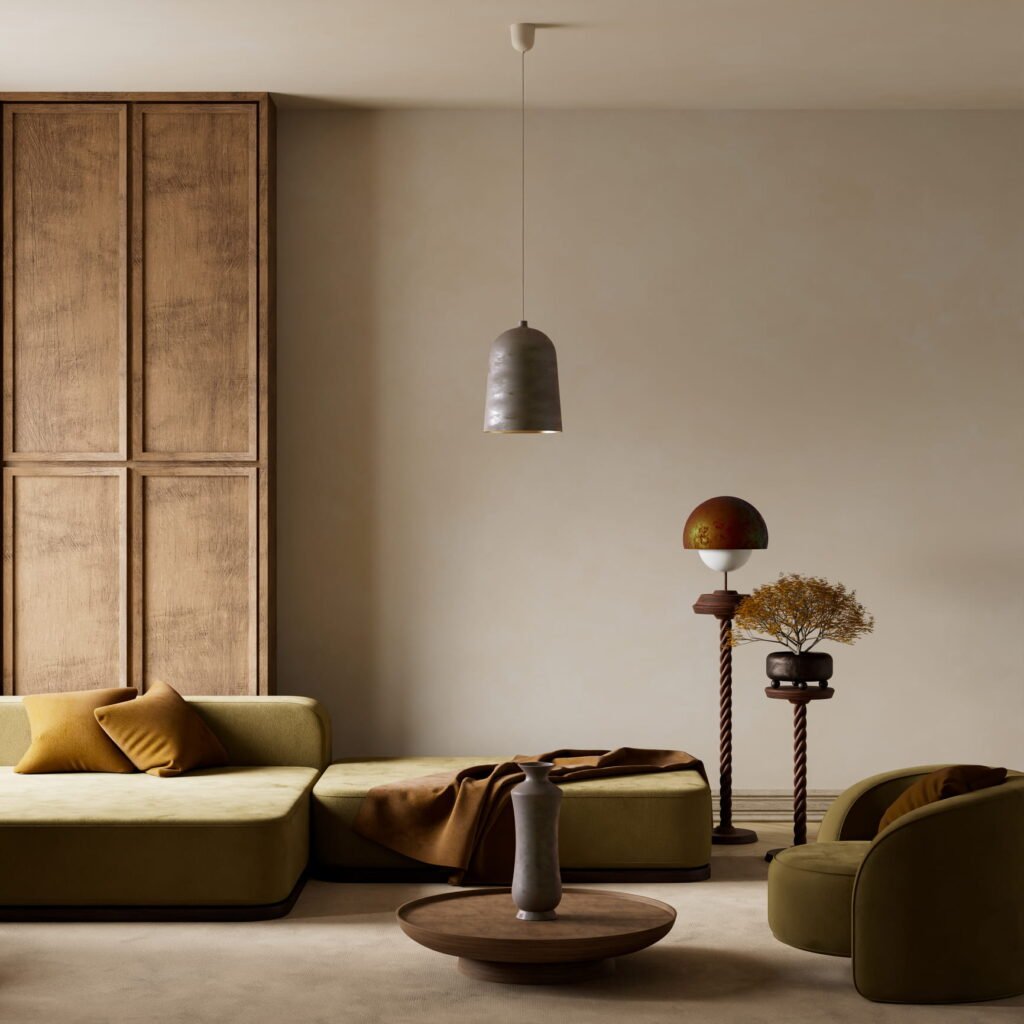
Images: Pavel Morillo
Designing Your Serene Japandi Bedroom
Bedroom furniture directly impacts sleep quality and morning routines, making thoughtful selection essential for well-being. Platform beds or simple wooden frames create the foundation for restful spaces while low profiles enhance the feeling of spaciousness in compact rooms.
Nightstands should provide practical storage while maintaining proportional balance with your bed. Single-drawer designs offer essential storage without visual heaviness, while built-in charging stations address modern technology needs discretely.
Wardrobes and dressers require special consideration in Japandi bedrooms. Closed storage maintains the uncluttered aesthetic while adequate capacity prevents belongings from accumulating in visible areas. Natural wood finishes coordinate with bed frames while metal accents add subtle contrast.
Our comprehensive Japandi bedroom furniture guide provides detailed advice on creating sleep sanctuaries that support both rest and morning productivity, including specific recommendations for small space solutions and family-friendly options.
Natural fiber rugs define sleeping areas while adding warmth and texture underfoot. Jute, wool, or cotton options in neutral tones complement wood furniture while providing comfort during barefoot morning routines.
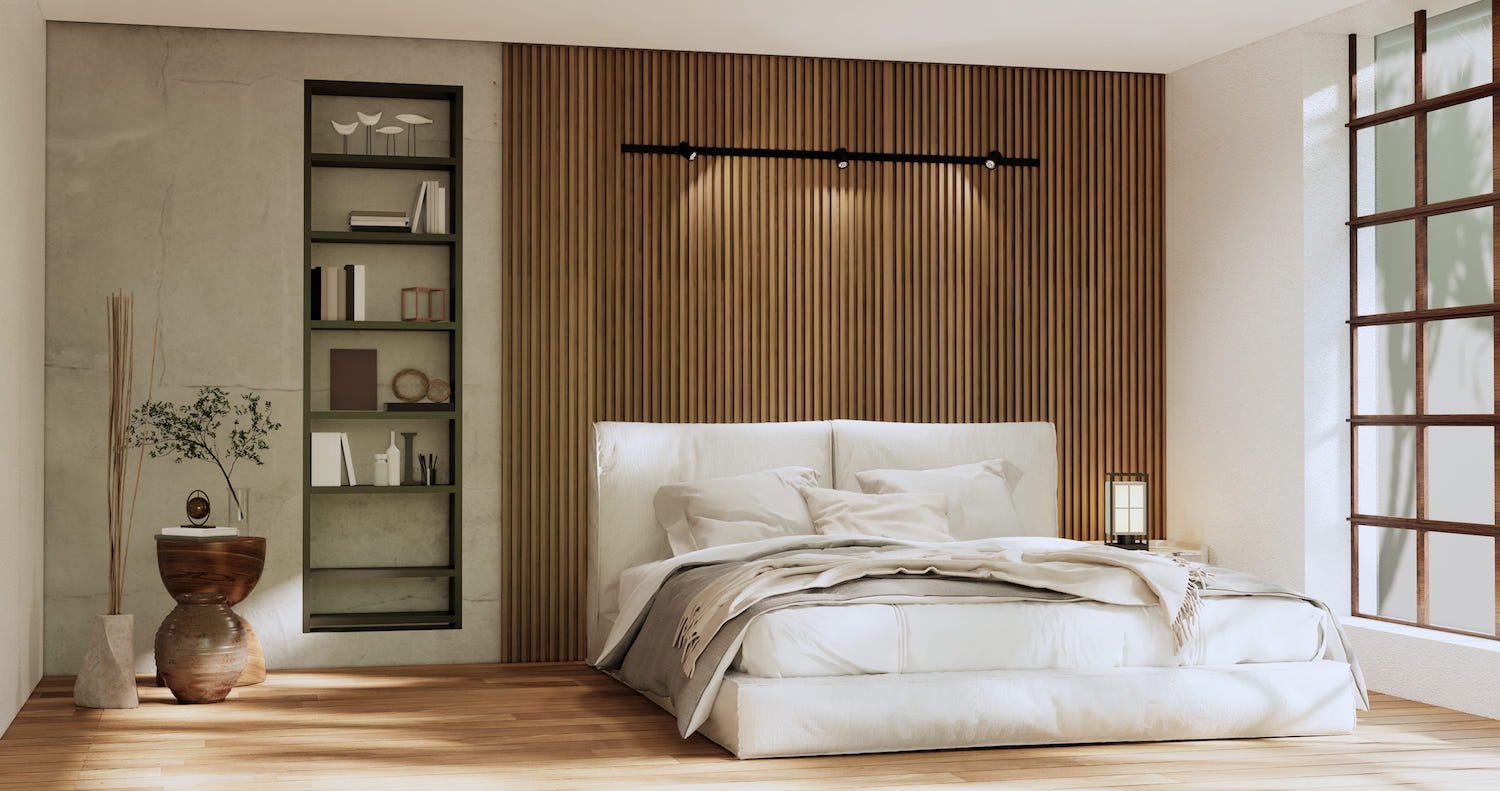
image: Navamin keawmorakot
Furnishing Your Japandi Dining Space
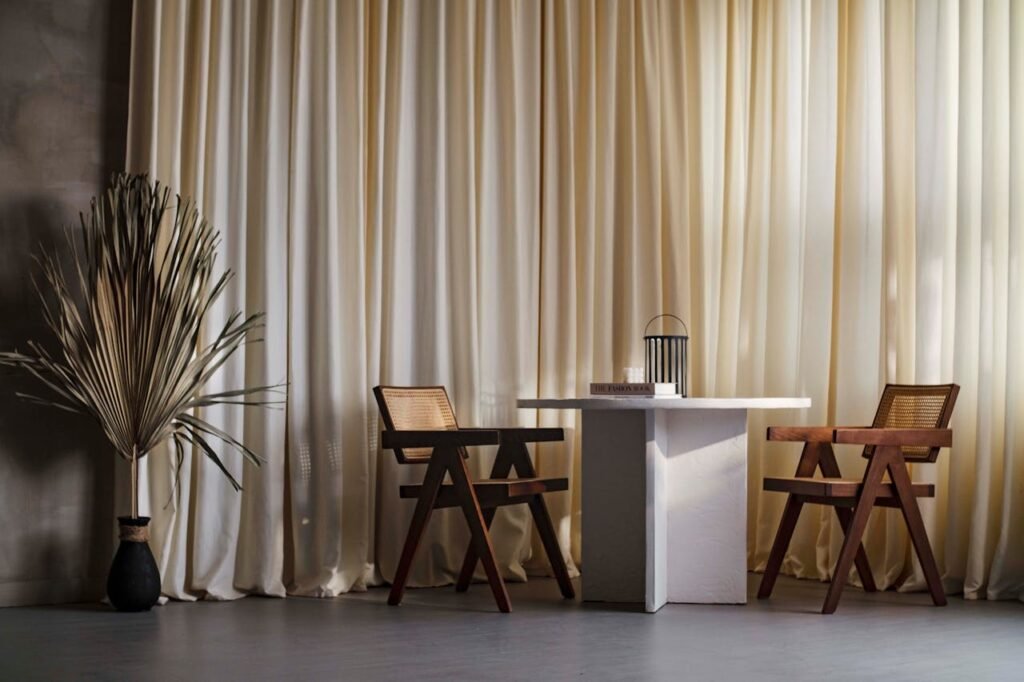
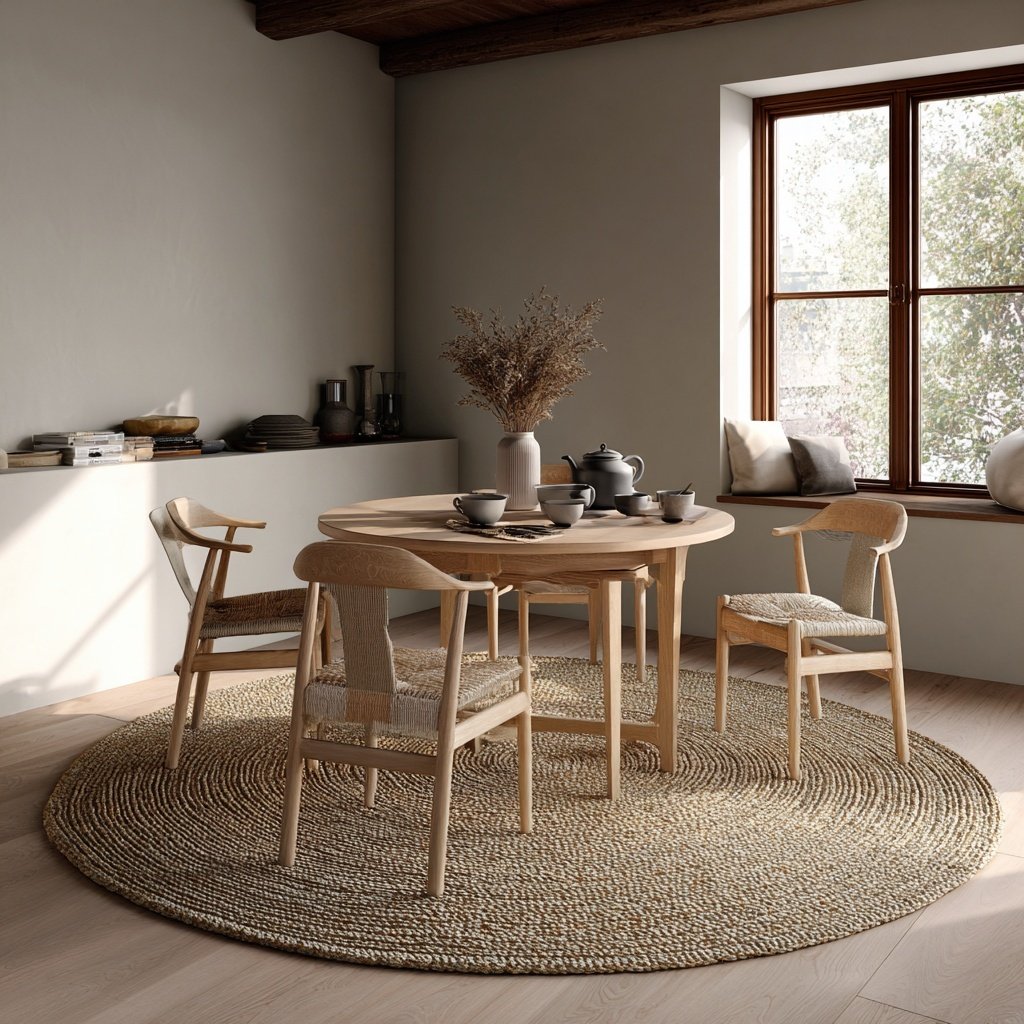
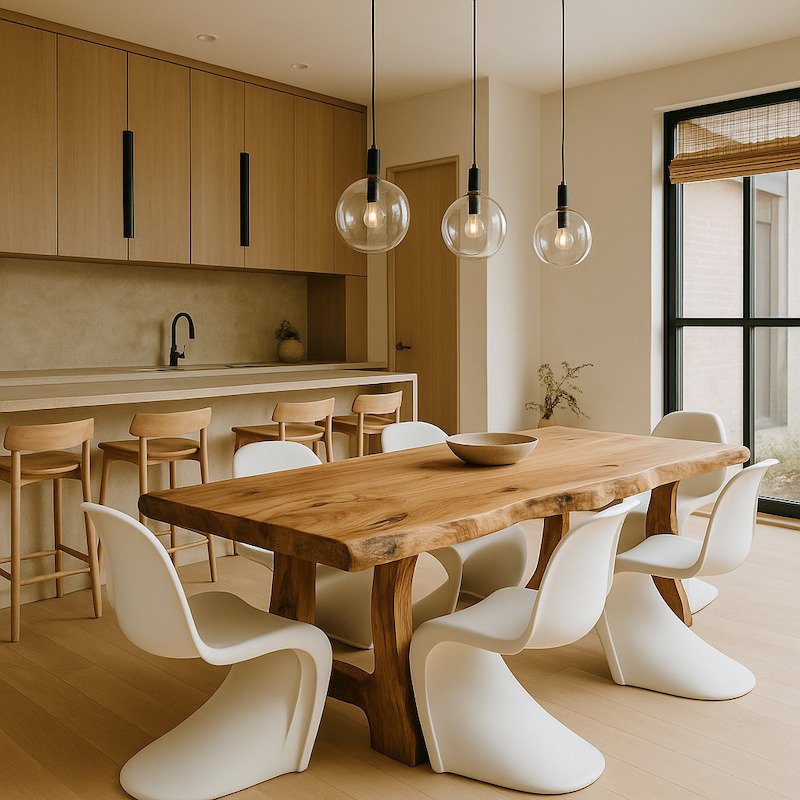
Dining furniture creates the stage for daily meals and special gatherings, requiring pieces that balance beauty with practical durability. Japandi Dining tables should accommodate your typical family size while offering expansion possibilities for entertaining.
Natural wood surfaces showcase the Japandi appreciation for organic beauty while withstanding the demands of daily use. Oil or wax finishes protect wood while maintaining tactile connection to the material’s natural qualities.
Seating choices significantly impact dining comfort and visual harmony. Mix wooden chairs with upholstered options for varied texture while maintaining color coordination. Bench seating provides flexible capacity and stores neatly under tables when space is limited.
Dining storage keeps linens, serving pieces, and seasonal items organized while contributing to the room’s aesthetic. Sideboards with closed compartments hide everyday necessities while open shelving displays beautiful dishware or serving pieces that earn their place through both function and beauty.
Understanding Japandi Furniture Materials
Wood Types and Their Characteristics
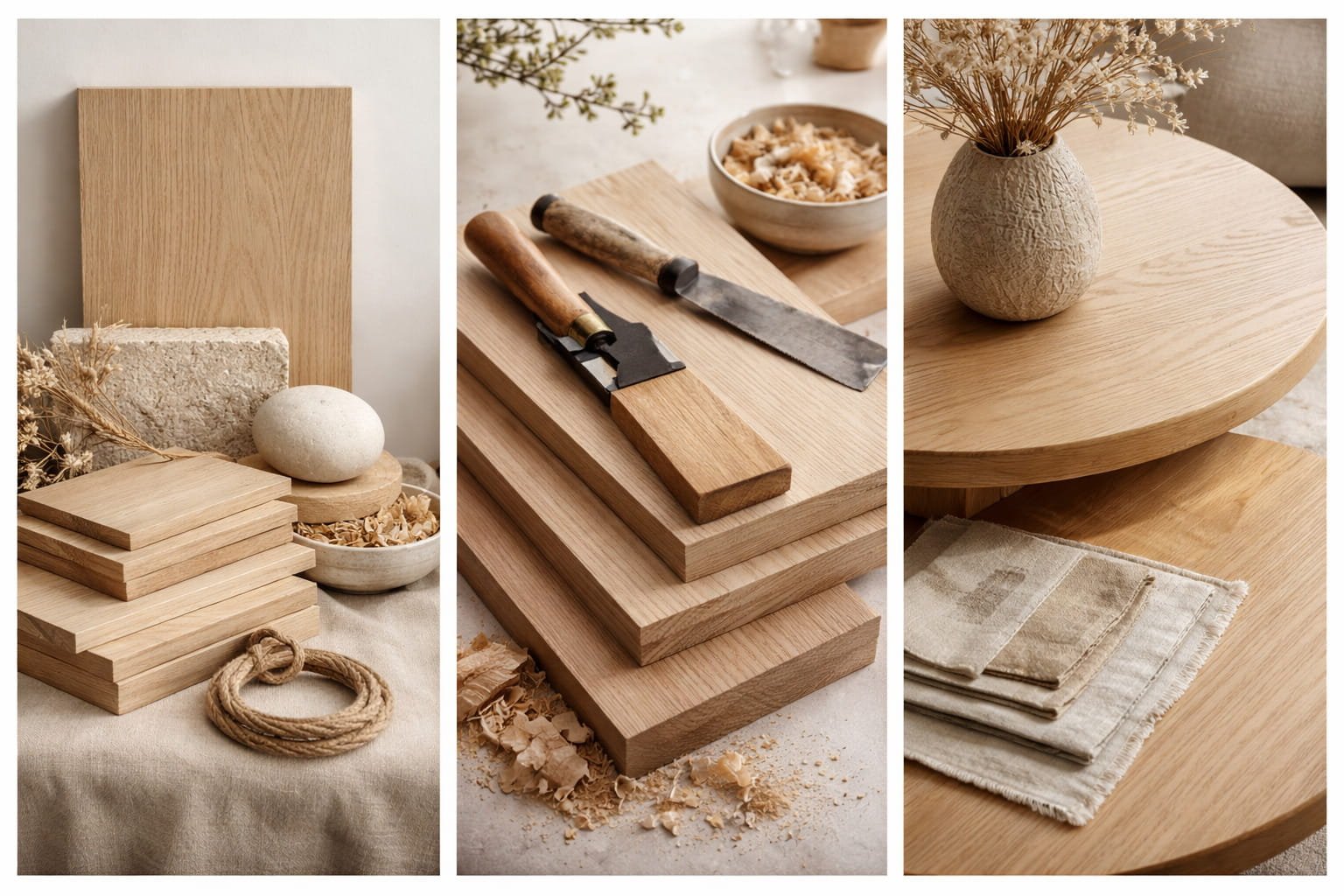
Oak remains the most popular choice for Japandi furniture due to its perfect balance of durability, workability, and attractive grain patterns. White oak offers subtle, refined appearance while red oak provides more dramatic grain for those seeking additional character.
Light woods like ash and beech create airy, spacious feelings particularly beneficial in small apartments or rooms with limited natural light. These affordable options take stains beautifully if you prefer slightly deeper tones while maintaining the style’s characteristic brightness.
Darker woods such as walnut and teak provide sophisticated contrast and rich visual weight. These premium materials create stunning focal pieces but require careful balance to avoid overwhelming smaller spaces or conflicting with the style’s light, airy principles.
Bamboo offers an increasingly popular sustainable alternative that aligns perfectly with Japandi environmental values. This rapidly renewable material provides comparable strength to hardwoods while supporting responsible consumption practices that many modern families prioritize.
Sustainable and Eco-Friendly Options
Environmental consciousness plays an increasingly important role in furniture selection as families become more aware of their consumption impact. FSC-certified woods ensure responsible forest management while reclaimed timber prevents valuable materials from reaching landfills.
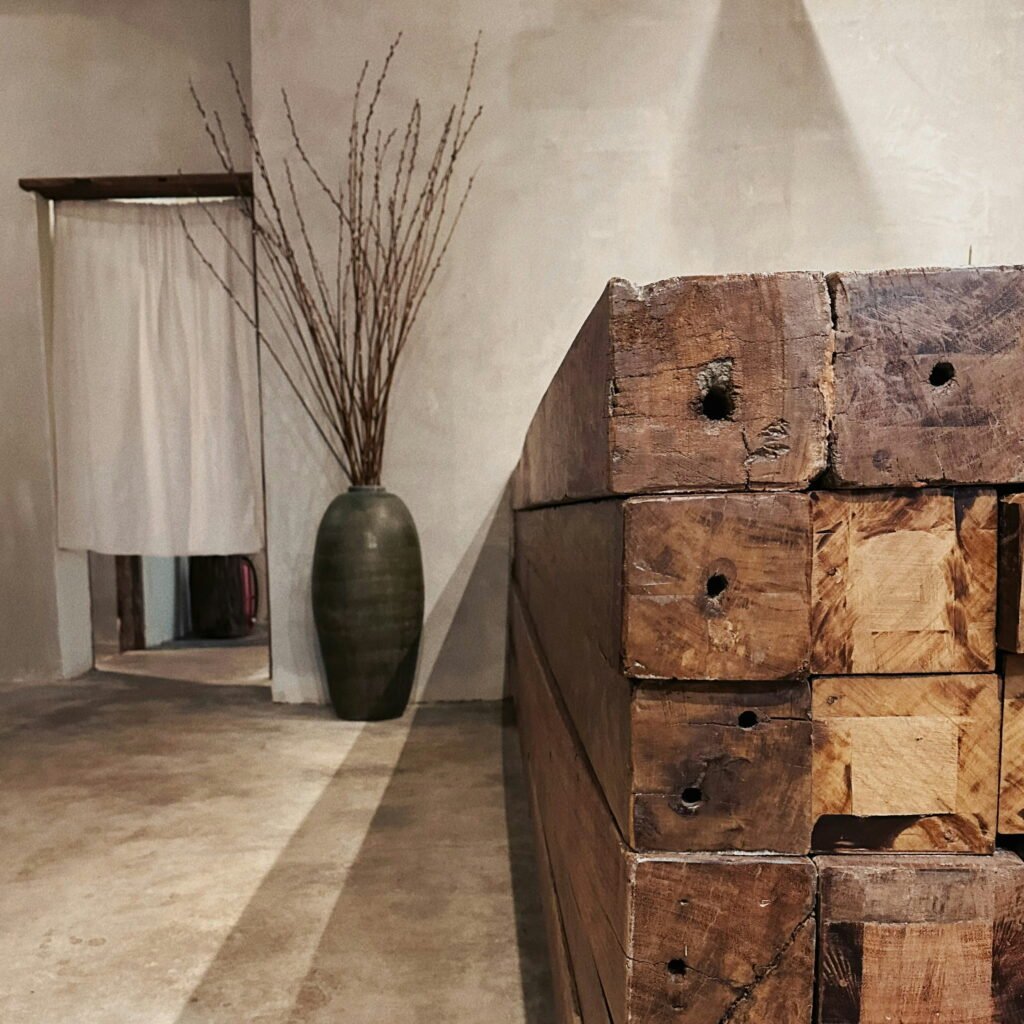
Reclaimed wood furniture brings instant character and history while often costing less than new materials. These pieces showcase authentic patina and wear patterns that new furniture takes years to develop, creating immediate authenticity in your spaces.
Additionally, locally-sourced materials reduce transportation environmental impact while supporting regional craftspeople and businesses. This approach aligns perfectly with Japandi values of mindful consumption and community connection.
Sustainable manufacturing processes also matter. Look for furniture makers who use low-VOC finishes, minimize waste, and operate energy-efficient workshops. These considerations ensure your furniture choices support environmental health alongside interior beauty.
Finishes That Enhance Natural Beauty
Natural oil finishes preserve wood’s organic texture while providing essential protection against moisture and wear. These penetrating finishes highlight grain patterns and allow the wood to breathe naturally, preventing the trapped moisture problems common with film finishes.
Wax finishes offer the most natural appearance and tactile experience but require regular maintenance to preserve protective qualities. They work best in formal areas with careful use rather than high-traffic family spaces where durability matters more.
Water-based polyurethane provides excellent protection for busy families while maintaining relatively natural appearance. These finishes resist stains, scratches, and moisture better than natural alternatives while still allowing wood grain to show clearly.
The choice between finish types should reflect your lifestyle and maintenance preferences. Natural finishes require more care but offer superior repairability, while protective finishes provide durability at the cost of some authenticity.

Budget-Friendly Japandi Furniture Shopping
Affordable Retail Options
Major retailers increasingly offer Japandi-inspired pieces at accessible price points. IKEA’s solid wood collections provide genuine natural materials starting around $100-300 for smaller pieces, making authentic style achievable for most budgets.
West Elm, CB2, and Target’s Project 62 line frequently feature Japandi-influenced designs in the $200-800 range. While not always solid wood, these pieces often incorporate natural materials and clean lines that support the overall aesthetic effectively.
Online marketplaces like Wayfair and Overstock carry extensive selections from various manufacturers, allowing price comparison and review research before purchasing. However, quality varies significantly, making careful evaluation essential for long-term satisfaction.
Australian retailers like Freedom, Fantastic Furniture, and Harvey Norman increasingly stock minimalist pieces that work within Japandi schemes, often at lower prices than imported alternatives while supporting local businesses.
Thrift Store and Secondhand Treasures
Vintage and secondhand furniture offers exceptional value for Japandi enthusiasts willing to invest time in searching and potentially refinishing pieces. Mid-century modern furniture from the 1960s-80s often embodies Japandi principles naturally.
Estate sales and consignment shops in affluent areas frequently yield high-quality solid wood pieces at fraction of retail costs. These venues provide opportunities to acquire genuine craftsmanship that mass-produced alternatives cannot match.
Facebook Marketplace, Gumtree, and local buy-sell groups connect buyers with sellers in their immediate areas, reducing transportation costs while allowing in-person inspection before purchasing. Building relationships with regular sellers can provide early access to exceptional pieces.
The key to successful secondhand shopping lies in understanding quality indicators and having realistic expectations about refinishing requirements. Surface damage can usually be repaired easily, but structural problems may exceed the piece’s value.
DIY and Upcycling Projects
Transforming existing furniture into Japandi pieces provides creative satisfaction while achieving custom results at DIY prices. Simple techniques like sanding, staining, and hardware replacement can dramatically change pieces’ appearance and style alignment.
Live-edge wood slabs from local sawmills become stunning dining tables with simple hairpin legs or custom-built bases. This approach typically costs 30-50% less than finished furniture while creating truly unique centerpieces for your dining space.
Refinishing projects work particularly well on solid wood pieces hidden under paint or outdated stains. Stripping away surface treatments often reveals beautiful natural grain that aligns perfectly with Japandi aesthetic principles.
Basic woodworking skills expand DIY possibilities significantly. Simple projects like floating shelves, bench seating, or storage cubes require minimal tools while providing custom solutions for specific space requirements.
Color Palettes and Textile Integration
Neutral Foundation Colors
Japandi furniture for minimal homes work within carefully curated color palettes that support rather than compete with natural materials. Warm whites, soft grays, and natural beiges create perfect backdrops that allow wood grains and textures to take center stage.
These neutral tones reflect light effectively, making small spaces feel larger while creating serene atmospheres that support relaxation and focus. Moreover, neutral furniture integrates easily with existing pieces, allowing gradual style transitions rather than complete replacements.
Avoid stark white or cool grays that can feel clinical or unwelcoming. Instead, choose colors with subtle warm undertones that complement rather than clash with natural wood tones prevalent in Japandi pieces.
The goal is creating cohesive color flow throughout your space while maintaining enough variation to prevent monotony. Layering different neutral tones adds depth without disrupting the overall sense of calm.
Adding Warmth Through Textiles
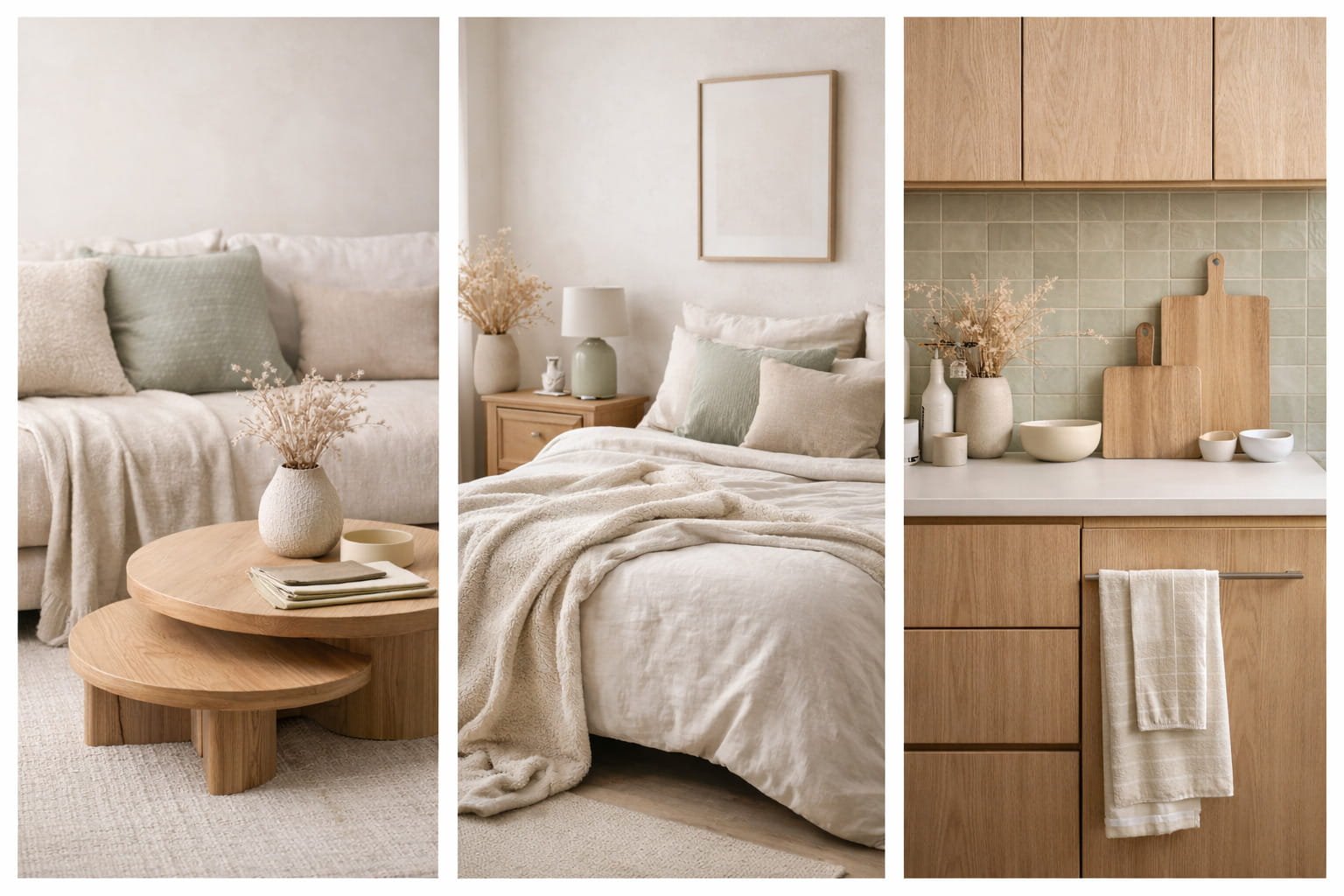
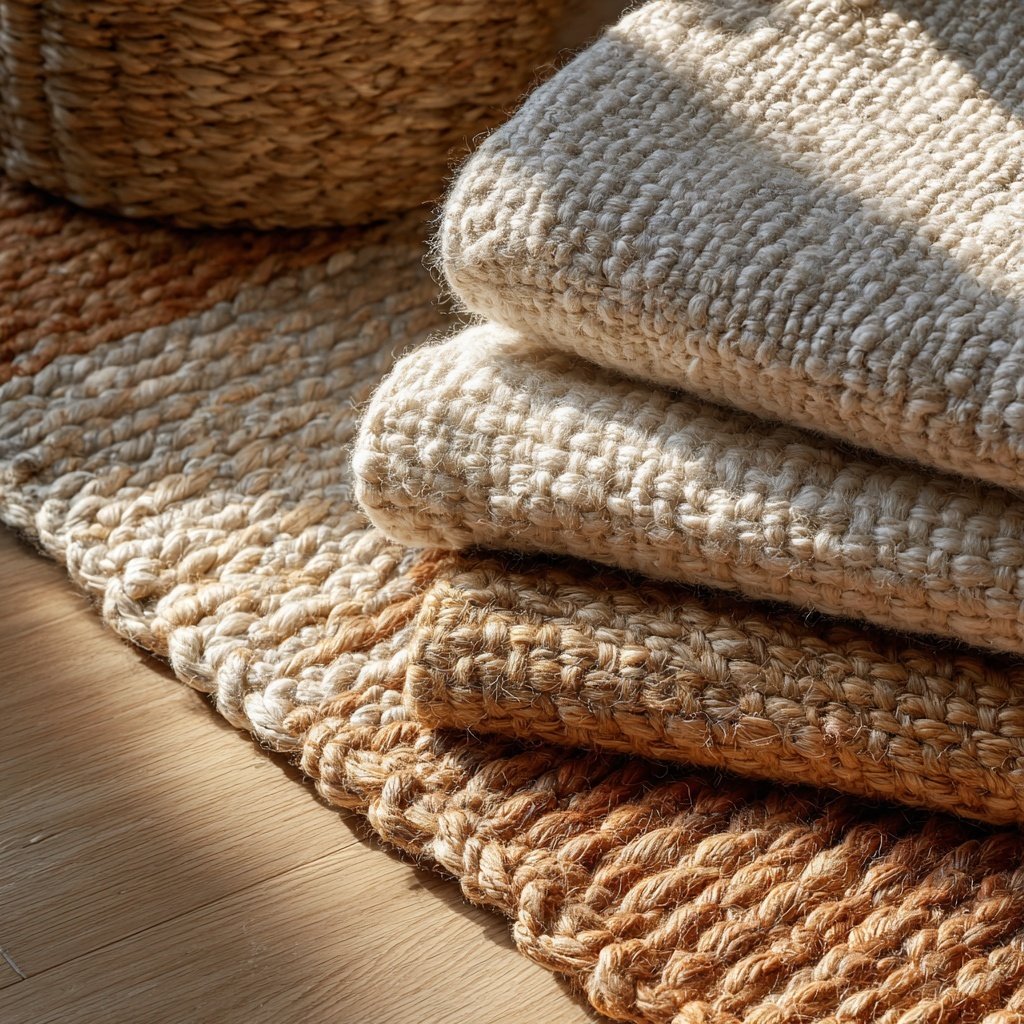
Natural fiber textiles bridge the gap between hard furniture surfaces and comfortable living spaces. Linen, cotton, wool, and jute bring softness and warmth while maintaining the style’s connection to organic materials.
Japandi rugs serve particularly important roles in defining spaces and adding comfort underfoot. Natural fiber options in neutral tones complement wood furniture while providing acoustic benefits and visual grounding for seating arrangements.
For detailed guidance on selecting rugs that enhance rather than overwhelm your Japandi furnishings, consult our comprehensive Japandi rugs guide, which covers sizing, placement, and maintenance for various natural fiber options.
Cushions, throws, and window treatments offer opportunities to introduce subtle color variation while maintaining overall neutrality. Sage greens, muted ochres, and soft terracottas work beautifully as accent colors that echo natural outdoor tones.
The key lies in restraint—choose one or two accent colors maximum and use them sparingly throughout your space for cohesion rather than overwhelming variety.
Room-by-Room Furniture Planning
Small Space Solutions
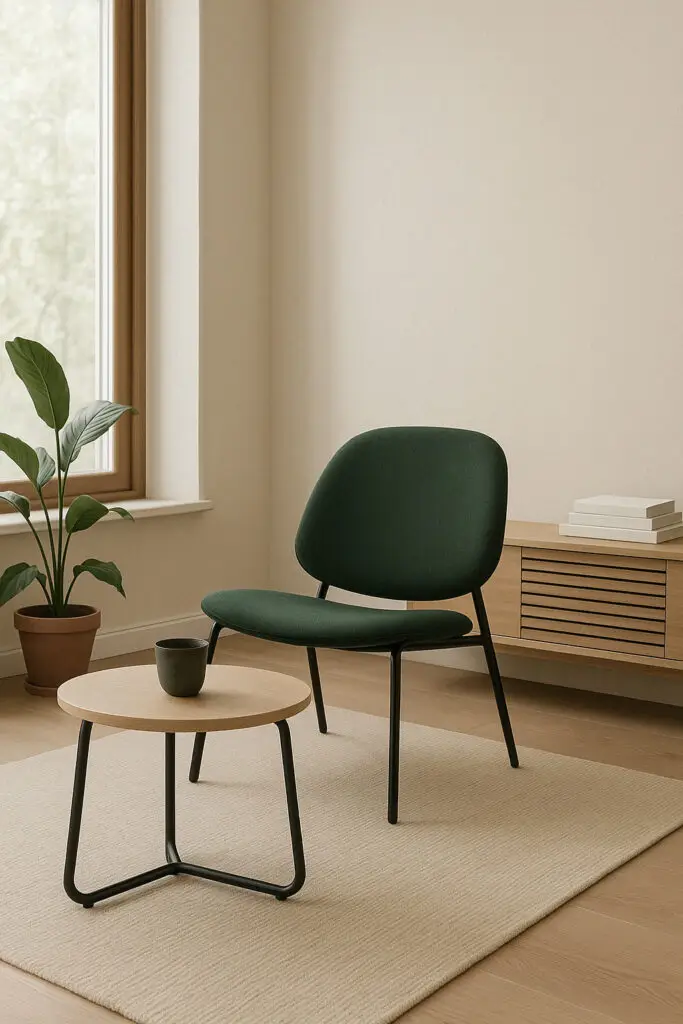
Compact living requires furniture that works harder while taking up less visual and physical space. Multi-functional pieces become essential, with storage ottomans serving as seating, coffee tables, and organizational solutions simultaneously.
Vertical storage maximizes floor space while maintaining clean lines essential to Japandi aesthetics. Tall, narrow bookcases and wall-mounted shelving draw the eye upward, making rooms feel larger while providing necessary storage capacity. for a comprehensive guide to japandi styling in small spaces check our article.
Furniture with legs creates visual lightness by allowing floor visibility underneath. This simple design choice makes spaces feel more open and easier to clean—important considerations for small apartment living.
Scale becomes crucial in compact spaces. Oversized furniture overwhelms rooms while pieces that are too small get lost visually. Measure carefully and consider proportional relationships when selecting furniture for tight quarters.
Open-Plan Living Solutions
Open-concept spaces require furniture arrangements that define different functional areas without creating visual barriers. Low-profile pieces maintain sightlines while providing necessary separation between living, dining, and work zones.
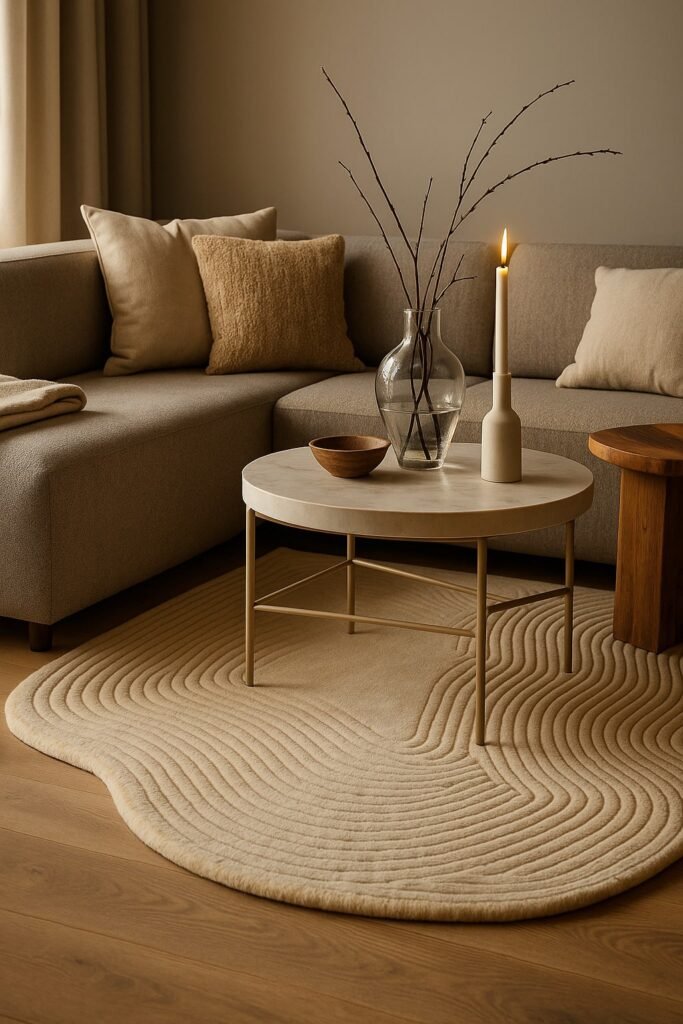
Area rugs become essential tools for creating defined spaces within larger rooms. Different rug sizes and placements signal functional changes while maintaining overall design coherence through coordinated colors and materials.
Furniture placement should support traffic flow while creating intimate conversation areas and work zones. Consider how people move through spaces during different daily activities when positioning key pieces. This is also true for lighting options and how to configure and design japandi lighting in your home to bring about ambiance and balance without overpowering the space.
Storage solutions in open plans must work harder since they remain visible from multiple vantage points. Choose pieces that look beautiful from all angles while providing necessary organizational capacity for various activities.
Family-Friendly Adaptations
Families with children require furniture modifications that maintain Japandi aesthetics while addressing safety and durability concerns. Rounded table corners, non-toxic finishes, and washable upholstery fabrics become essential considerations.
Storage solutions should accommodate children’s belongings while maintaining visual order. Closed storage with child-friendly hardware keeps toys and supplies organized but accessible for independent play and cleanup routines.
Furniture should withstand increased wear while remaining repairable rather than replaceable. Solid wood pieces can be refinished periodically, while quality upholstery can be professionally cleaned or reupholstered as needed.
Consider how furniture will evolve with growing children. Pieces that adapt to changing needs provide better long-term value than items requiring frequent replacement as family circumstances change.
Maintenance and Care for Japandi Furniture
Daily Care Routines
Protecting your Japandi furniture investment requires simple daily habits that prevent damage and preserve beauty. Use coasters consistently, dust regularly with microfiber cloths, and address spills immediately to maintain optimal appearance.
Natural materials respond better to gentle care than harsh cleaning products. Develop routines using mild soaps, soft cloths, and techniques that work with rather than against each material’s characteristics.
Prevention proves more effective than restoration. Protect surfaces from direct sunlight, maintain stable humidity levels, and use appropriate padding under decorative objects to prevent scratches and marks.
These small daily efforts compound over time, keeping furniture looking beautiful while extending its functional lifespan significantly beyond typical expectations for quality pieces.
Seasonal Maintenance
Natural wood furniture benefits from periodic conditioning that replenishes protective oils and maintains lustrous appearance. Oil-finished pieces typically need attention every 6-12 months depending on use and environmental conditions.
Seasonal deep cleaning removes accumulated dust and residue while allowing thorough inspection for any developing issues. Early detection of problems like loose joints or finish wear prevents minor issues from becoming major repairs.
Climate changes affect natural materials significantly. Use humidifiers during dry winter months and ensure adequate ventilation during humid summers to prevent wood movement and related problems.
Professional maintenance relationships provide access to specialized knowledge and services that keep furniture performing optimally throughout its lifespan while maintaining warranty coverage where applicable.
Long-term Investment Protection
Quality Japandi furniture appreciates in value when properly maintained, making care routines genuine investment protection rather than mere maintenance expenses. Document purchase information, care routines, and any professional services for future reference.
Professional refinishing every 10-15 years can completely restore furniture appearance while updating finishes to current preferences or protection requirements. This service typically costs much less than replacement while often improving upon original quality.
Insurance considerations become important for higher-value pieces. Document furniture with photographs and appraisals while understanding coverage limitations and requirements for maintaining protection.
Estate planning should include furniture documentation for pieces with significant monetary or sentimental value. Quality Japandi furniture often becomes treasured family heirloom pieces passed between generations.
Where to Shop for Quality Japandi Furniture
Online Retailers and Marketplaces
Digital shopping provides access to vast selections with detailed product information, customer reviews, and competitive pricing. Wayfair, CB2, and West Elm offer extensive Japandi-inspired collections with frequent sales and promotional pricing.
Etsy connects buyers with individual craftspeople creating handmade pieces tailored to specific requirements. While prices vary widely, custom options allow perfect sizing and finishing for unique spaces or preferences.
Amazon carries budget-friendly options but requires careful evaluation of seller credentials and return policies. Read reviews thoroughly and understand shipping, assembly, and warranty terms before purchasing significant pieces.
Australian online retailers like Temple & Webster and Matt Blatt provide local customer service and faster delivery while often featuring exclusive pieces not available through international sites.
Local Furniture Stores and Craftspeople
Local furniture makers often provide superior quality while supporting community businesses and reducing environmental transport impact. Visit workshops and showrooms to evaluate construction quality and discuss custom options.
Building relationships with local craftspeople provides access to repair services, modification options, and priority access to new pieces. These ongoing relationships enhance furniture ownership experience significantly.
Antique stores and consignment shops offer opportunities to discover unique pieces with established character and proven durability. Developing relationships with shop owners provides early access to exceptional finds.
Local maker markets and craft fairs provide opportunities to meet craftspeople personally while evaluating their work quality and design aesthetic firsthand before making purchasing commitments.
Timing Purchases for Best Value
Furniture sales follow predictable patterns that savvy shoppers can leverage for significant savings. January clearances, end-of-summer sales, and pre-holiday promotions often provide 20-40% discounts on quality pieces.
End-of-line styles offer substantial savings as retailers clear inventory for new collections. However, ensure you love pieces completely since discontinued styles may be difficult to expand or match later.
Floor model sales provide immediate availability and significant discounts on display pieces with minor cosmetic wear. These pieces often show beautifully in retail environments and require no delivery waiting periods.
New collection launches often trigger sales on previous seasons’ inventory. Monitor favorite retailers’ release schedules to time purchases strategically for maximum value.
Future Trends in Japandi Furniture
Sustainable Innovation
Environmental consciousness continues driving innovation in sustainable materials and manufacturing processes. Expect increased availability of recycled materials, carbon-neutral production methods, and local sourcing options.
Bio-based finishes and adhesives reduce indoor air quality impact while providing comparable protection to traditional options. These innovations support healthier homes while maintaining aesthetic and durability standards.
Circular economy principles influence furniture design with increased focus on repairability, modularity, and end-of-life material recovery. These considerations extend product lifecycles while reducing environmental impact.
Consumer demand for transparency drives increased disclosure of supply chain practices, material sourcing, and environmental impact metrics from furniture manufacturers and retailers.
Technology Integration
Smart furniture integration addresses modern connectivity needs while maintaining Japandi aesthetic principles. Wireless charging surfaces, hidden cable management, and discrete device storage solutions become standard features.
Voice control compatibility and app-based customization options provide convenience while remaining visually invisible within traditional furniture forms. This technology integration supports modern lifestyles without compromising design integrity.
Augmented reality shopping tools help customers visualize furniture in their actual spaces before purchasing, reducing return rates while increasing satisfaction with final selections.
3D printing and digital fabrication expand customization possibilities while potentially reducing costs and environmental impact of traditional manufacturing processes.
Evolution of Style Preferences
Japandi furniture continues evolving as cultural preferences shift toward wellness-focused living environments that support mental and physical health through thoughtful design choices.
Increased emphasis on biophilic design principles incorporates more organic shapes and natural elements while maintaining the style’s fundamental simplicity and functionality focus.
Multi-generational living arrangements influence furniture design toward pieces that accommodate varying mobility needs and lifestyle preferences within shared spaces.
Global connectivity exposes consumers to regional variations of minimalist design philosophies, potentially expanding Japandi’s definition to include influences from other cultures with similar values.
Conclusion: Building Your Perfect Japandi Furniture Collection
Creating a cohesive Japandi furniture collection requires patience, planning, and commitment to quality over quantity. Focus on acquiring pieces that genuinely enhance your daily life while supporting your long-term vision of peaceful, functional living.
Remember that authentic Japandi style develops gradually through thoughtful choices rather than rushed purchases. Each piece should earn its place through both beauty and utility while contributing to your space’s overall sense of harmony and calm.
Whether you’re starting with budget-friendly options or investing in heirloom-quality pieces, prioritize natural materials, clean lines, and functional design. These timeless principles ensure your furniture choices remain relevant and beautiful for decades to come.
Most importantly, let your personal lifestyle and preferences guide furniture selection within Japandi principles. The goal isn’t copying magazine photos perfectly, but creating a home that supports your family’s well-being while reflecting your values of mindful, sustainable living.
Your Japandi furniture journey is ultimately about more than interior design—it’s about creating spaces that nurture your soul while serving your practical needs. With careful selection and proper care, these pieces will reward you with beauty, function, and satisfaction that extends far beyond their monetary value.
While Scandinavian furniture emphasizes light colors, comfort, and functionality, Japandi furniture adds Japanese minimalism and wabi-sabi philosophy. Japandi pieces show more restraint in decorative elements, embrace natural imperfections, and emphasize connection to nature more strongly than traditional Scandinavian designs.
Quality Japandi furniture ranges from affordable mass-market options ($200-800) to investment handcrafted pieces ($1000+). The style’s emphasis on natural materials and quality construction can increase costs, but budget-friendly options exist at major retailers like IKEA, Target, and West Elm.
Yes, Japandi furniture’s neutral colors and clean lines integrate well with many design styles. It pairs particularly well with modern, mid-century, and bohemian elements. However, avoid mixing with overly ornate or heavily decorative styles that contradict Japandi’s minimalist principles.
Light woods like oak, ash, and bamboo create the classic Japandi aesthetic, while darker woods like walnut provide sophisticated contrast. Focus on woods with visible grain patterns and natural finishes rather than painted or heavily stained options that hide the material’s natural beauty.
Natural oil finishes require re-oiling every 6-12 months and gentle cleaning with mild soaps. Wax finishes need regular buffing and reapplication. Avoid harsh chemicals and use coasters consistently. Professional refinishing every 10-15 years maintains optimal appearance and protection.

Pingback: Japandi Decor Ideas for a Serene Home - The top 10 must have | sabi.japandistylehomedecor
Pingback: 5 stunning Japandi Coffee Tables (2026) to elevate your space | sabi.japandistylehomedecor
Pingback: Japandi Design Principles: Techniques & Essentials | sabi.japandistylehomedecor